

Type One
Helena is an investor in Type One Energy, an energy company advancing one of the most promising fusion devices ever invented: the stellerator.
For decades, the stellarator’s promise was constrained by the complexity of its design. The precisely twisted magnetic coils it requires were too difficult and too costly to manufacture at reactor scale. Recent breakthroughs in high-temperature superconducting magnets and computational optimization have finally removed that barrier, and Type One Energy has assembled a world-class team to meet the moment.
Type One’s stellarators incorporate high-temperature superconducting magnets built on the same HTS tape platform pioneered by Commonwealth Fusion Systems, another Helena-backed fusion company. Helena’s support for both reflects a deeper conviction: that fusion energy will be essential to the world’s clean energy future, and that backing complementary approaches — across reactor designs, supply chains, and commercialization pathways —is the fastest way to get there.
That future is rapidly approaching. In 2025, Type One partnered with the Tennessee Valley Authority, one of the nation’s largest public utilities, to develop a 350-megawatt stellarator pilot plant, marking one of the most significant utility-fusion agreements ever signed and a major milestone on the pathway to commercial fusion power.
An Elusive Silver Bullet
The promise of fusion power is immense: a virtually limitless supply of energy, constant and entirely clean; with negligible waste, no risk of meltdown, and a minor land footprint.
And yet, if achieved, they’re all true. It’s why scientists have been pursuing a working, commercial-scale fusion device for more than a hundred years, ever since Arthur Eddington correctly theorized in 1920 that the energy of the sun – the energy that animated life on earth – was produced by atomic collisions.

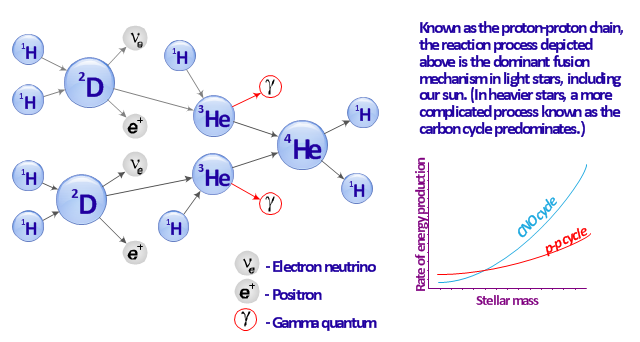
Those collisions unfold as follows: two hydrogen nuclei collide to form deuterium, a heavier hydrogen isotope. That deuterium nucleus collides with another hydrogen nucleus to form helium-3. Two helium-3 nuclei then collide with each other to create helium-4, releasing two hydrogen nuclei in the process. Two conditions make this possible inside the sun: first, the core temperature — a tepid 15,000,000 degrees Celsius — is hot enough to strip electrons from their atoms, turning hydrogen gas into plasma, a state in which bare nuclei can collide directly; second, the sun’s immense gravity keeps that plasma dense enough for collisions to occur with extraordinary frequency.
At the end of this chain, four hydrogen nuclei have become one helium-4 nucleus. But helium-4 is slightly less massive than the four hydrogen nuclei that produced it — a tiny amount of matter has gone missing in this atomic round of bumper cars. That’s where the energy comes from. Per Einstein’s E = mc², even a very small loss in mass (m) becomes an enormous gain in energy (E) when multiplied by the speed of light (c) squared.
That E is the energy of a fusion reaction
Replicating that process on Earth, without the sun’s size, gravity, or 4.6 billion years of practice, has been one of the defining scientific challenges of the modern era.
A Trajectory of Fusion Devices
A sustained fusion reaction depends on three three things: temperature, density, and time. It needs to be hot enough for the gas to become plasma, and for the ions to move sufficiently fast. The ions need to be close enough together for collisions to happen frequently. And they need to be confined in this very hot, very dense environment for as long as possible.
Of course, on Earth, our temperature is a bit chillier than on the sun, and our force of gravity slightly less bone-crushing. While this is great for our continued existence, it makes initiating fusion reactions much trickier.
Attempts to create a fusion device have encompassed many approaches, from mirrors to diamonds to magnets, and thousands of experiments. In 2022, the Lawrence Livermore National Laboratory achieved momentary ignition — the point at which the energy produced by a fusion reaction exceeds the energy required to drive it — by firing laser beams at a gold-coated cylinder containing a tiny capsule of deuterium and tritium (another hydrogen isotope).
Of these, the most explored and most funded, by far, has been the tokamak.
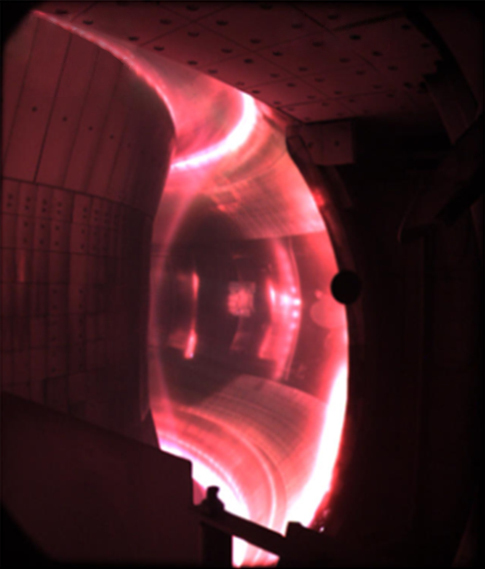
A tokamak device starts with a large, perfectly symmetrical toroidal chamber. This chamber is filled with a gas of deuterium and tritium. An electric current is induced in the gas (called Ohmic heating) to increase the temperature (along with other heating methods like neutral beam injection and high-frequency electromagnetic waves) and turn the gas into plasma, while magnets in the middle, coiled around, and on the outside keep the plasma contained. Crucially, the electric current must be induced in the plasma because it prevents the plasma from drifting horizontally out (which it wants to do, since the magnetic fields are not uniform).
Tokamaks were first designed in the USSR in 1950. Since then, more than 220 have been developed, including ITER, a 500-acre tokamak project in Southern France backed by 34 countries and more than $20 billion in funding. (You can read more on the history of tokamaks here.)
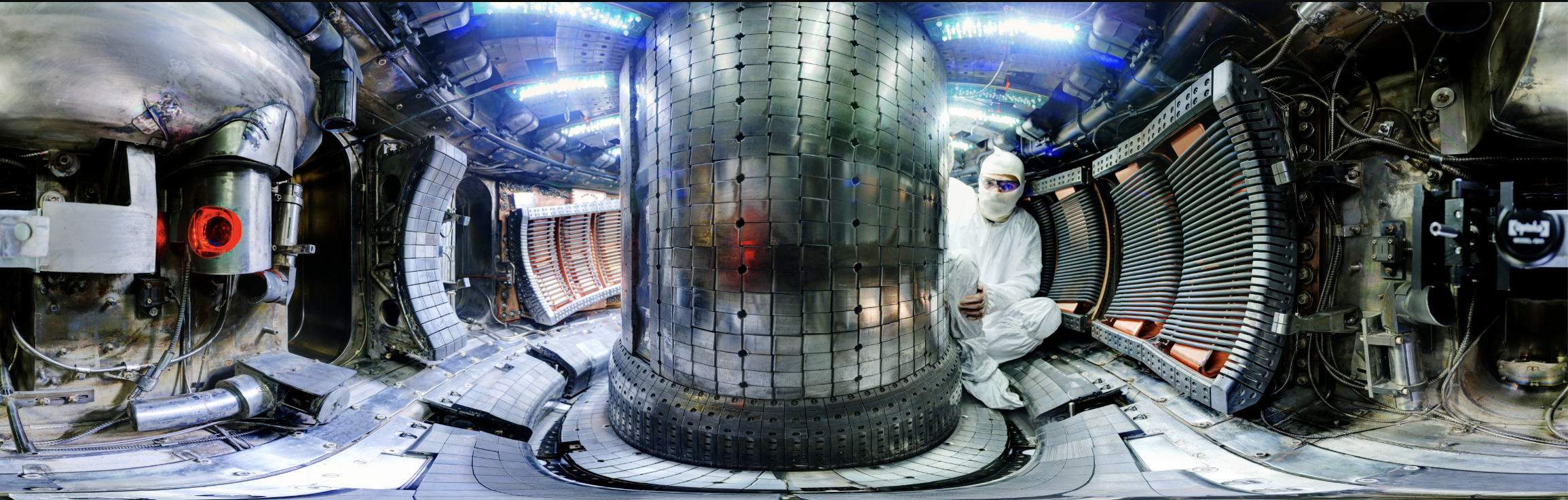
Founded in 2019, Type One Energy has drawn on decades of tokamak research and engineering breakthroughs to pursue a closely related, but fundamentally different, device: the stellarator.
The Next Frontier
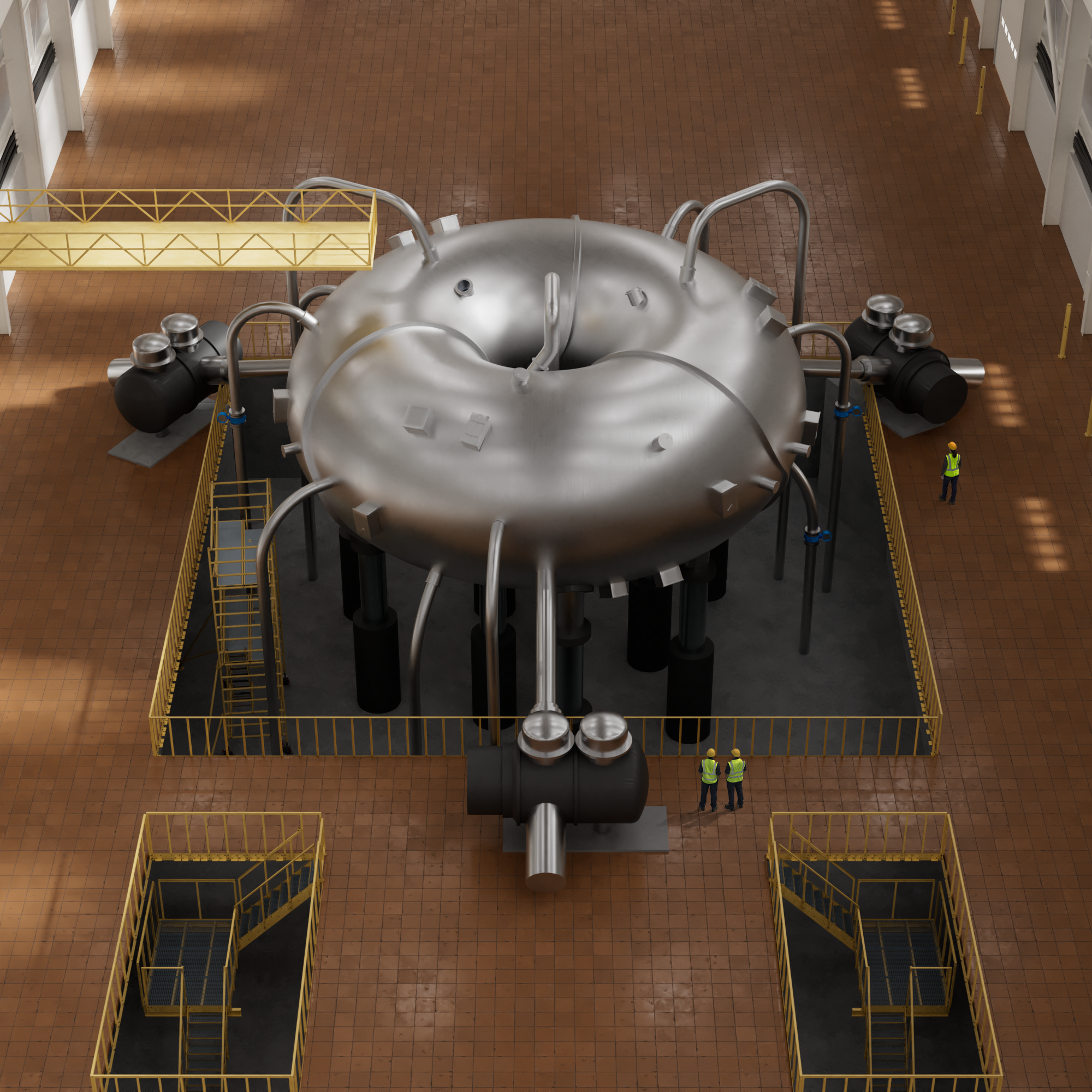
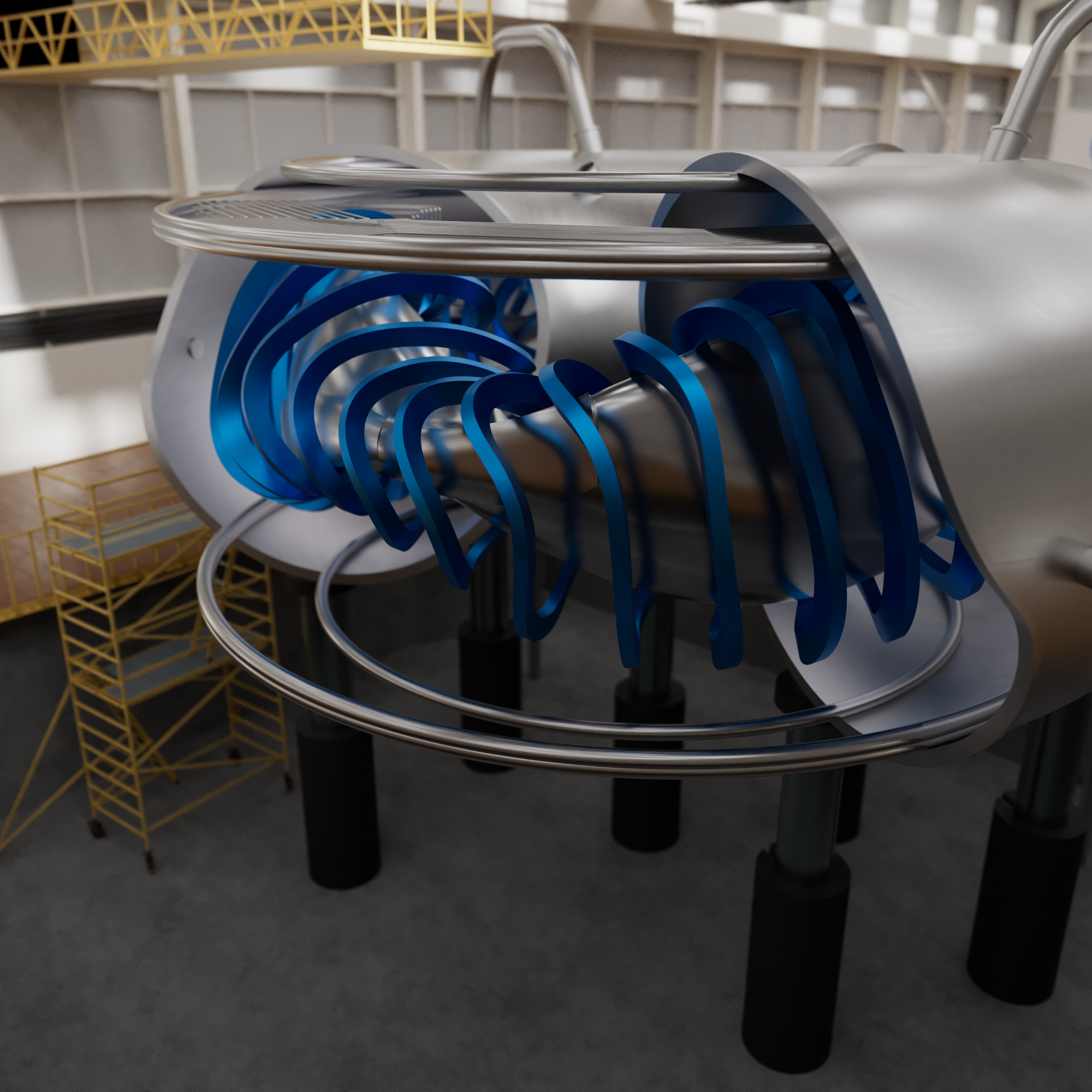
A stellarator is also roughly toroidal like a tokamak, but less symmetrical — more twisted, intricate, and visibly complex. It is lined and striated with snarls of magnetic coils that can appear haphazard and random. Professor Aaron Bader, a Senior Scientist at Type One Energy, gave a simple visual comparison: if a tokamak is a donut, a stellarator is a cruller.
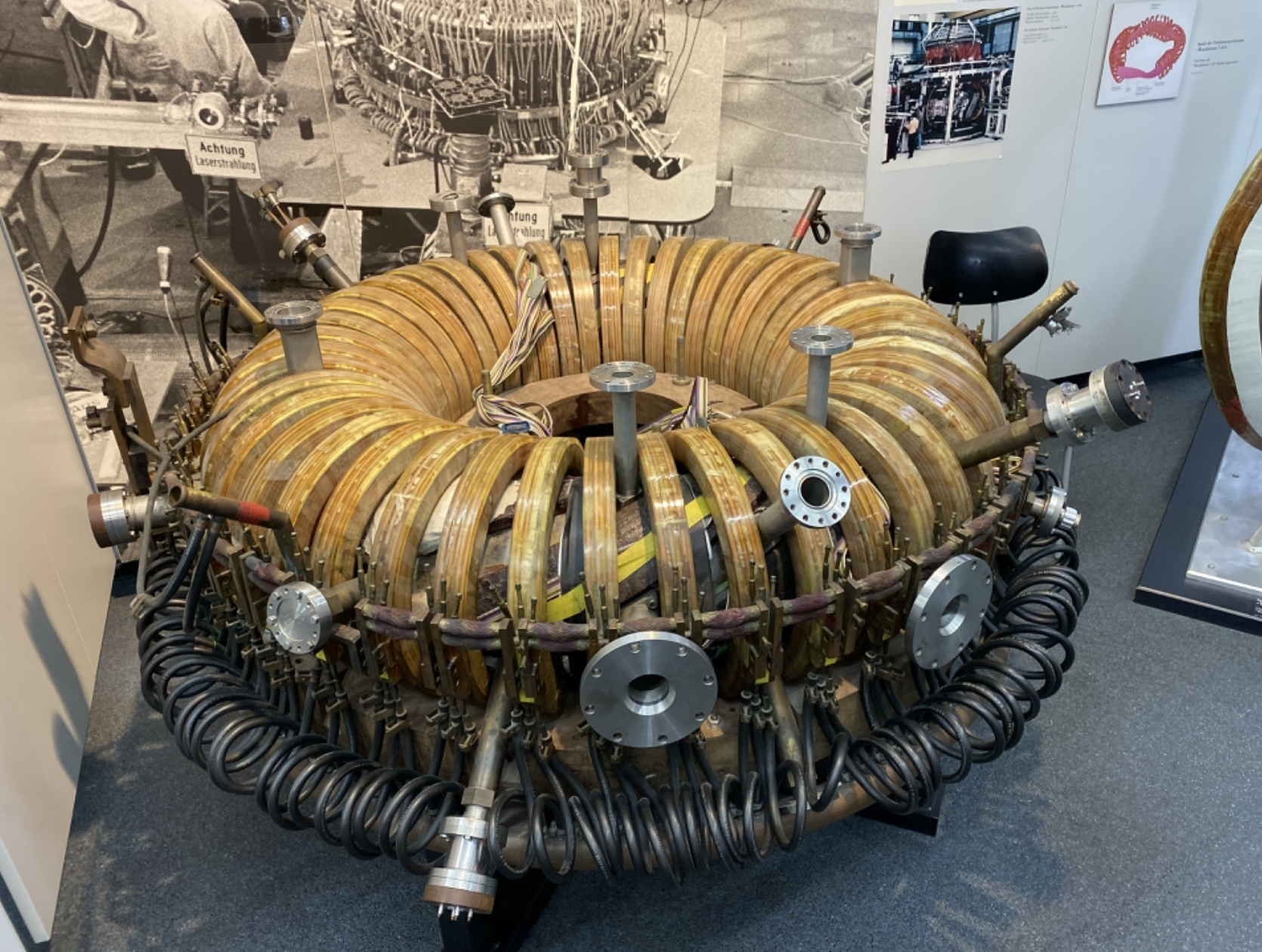
The reason for all this points to the central difference between a tokamak and a stellarator: While a tokamak relies on a strong current flowing through the plasma (which helps generate part of the confining magnetic field), while a stellarator confines the plasma primarily with magnetic fields produced by external coils and does not require a sustained plasma current for confinement. To achieve this, magnetic coils are twisted and belted around the device to keep the field uniform. Although a stellarator does not have axisymmetry, if the magnetic coils are placed strategically, it does have quasi-symmetry; that is, the magnetic field acting on the plasma is uniform, even if the magnets are not placed uniformly.
Type One Energy did not invent the stellarator. It was designed in 1951, just a year after the tokamak, by Princeton astrophysicist Lyman Spitzer in a secret Cold War research project called Project Matterhorn. (When it was declassified a decade later, Project Matterhorn became the Princeton Plasma Physics Laboratory. Its address is 100 Stellarator Road.) However, tokamak development quickly outpaced stellarators, driving the majority of attention and funding toward its advancement. In the intervening decades, several key developments occurred that would make a stellarator renaissance possible.
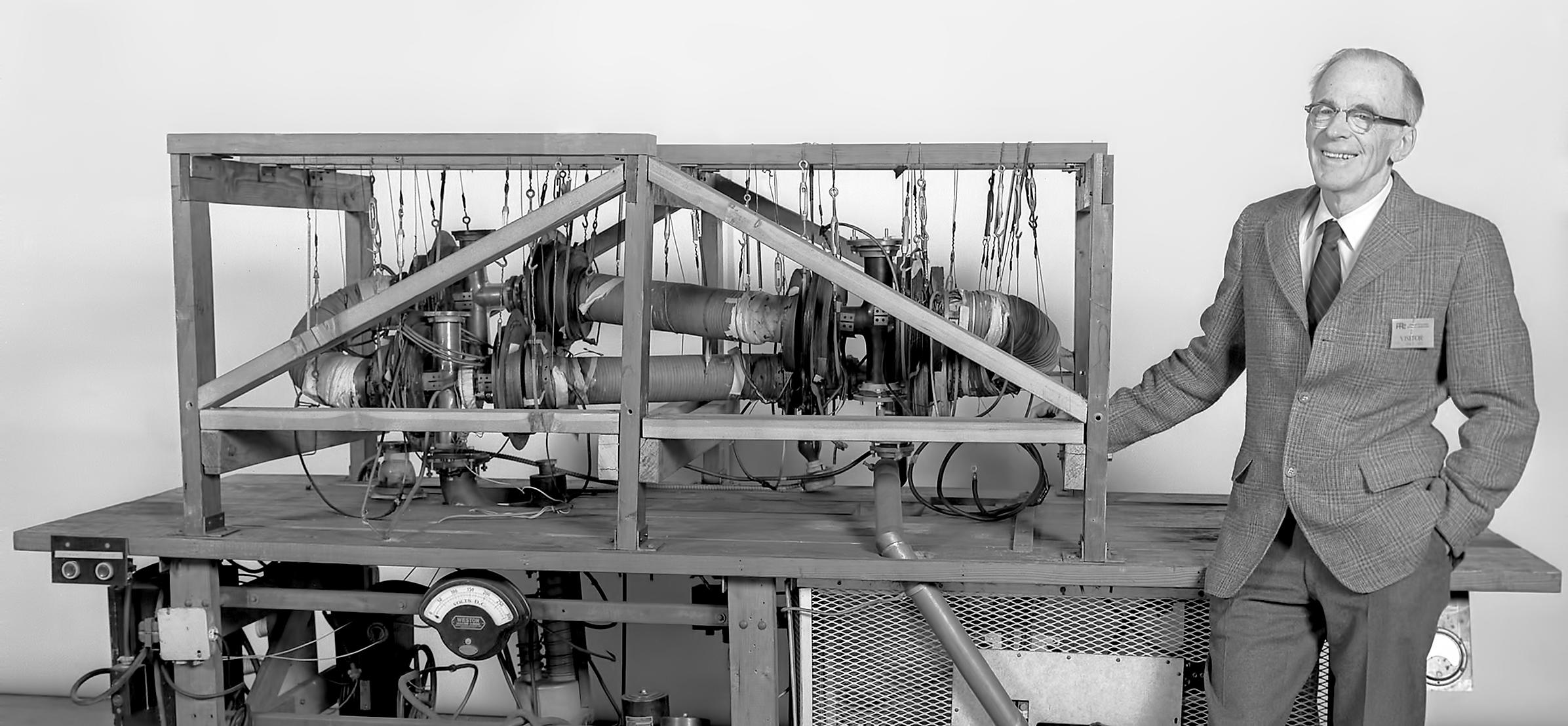
In 1983, Allen Boozer developed a mathematical framework for the quasi-symmetry described above. Then, in 1988, Jurgen Nuhrenberg and Regine Zille at the Max Planck Institute for Plasma Physics showed that quasisymmetry could be applied to a stellarator design.
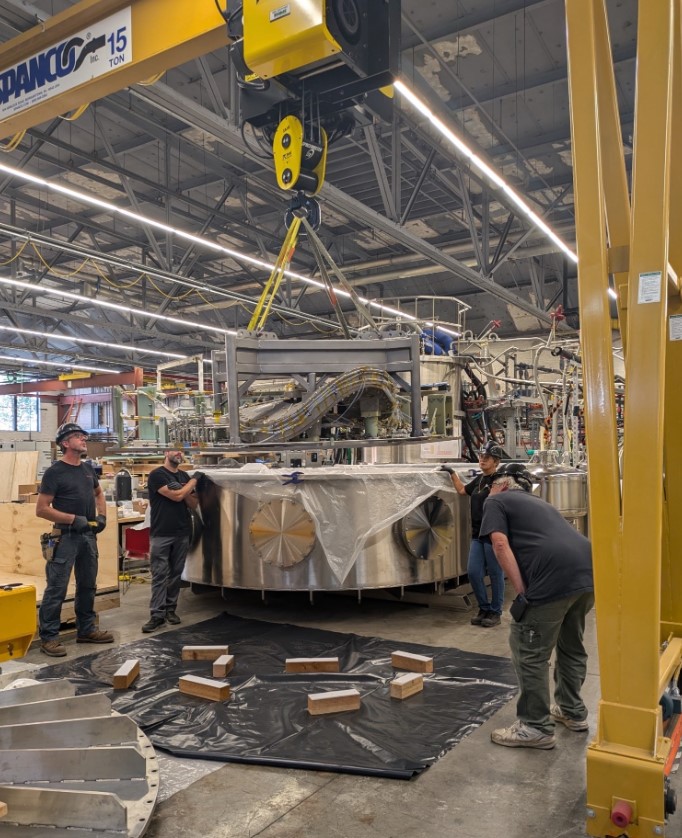
Of the roughly dozen stellarator projects built to date, two stand out as especially influential: the Helically Symmetric eXperiment (HSX) at the University of Wisconsin–Madison and Germany’s Wendelstein 7-X (W7-X). Each has helped validate a different piece of what would need to work for stellarators to be commercially viable.
Early stellarators struggled because small variations in field strength drove strong neoclassical transport—particles would get trapped in “banana” orbits and leak energy. In 1999, HSX, a small research device, became the world’s first stellarator to operate with a quasi-symmetric magnetic field, demonstrating drastically improved results in energy confinement (i.e., reduced neoclassical transport and lower particle/energy losses).
Meanwhile, W7-X – far larger than HSX – spent nearly two decades in design and construction before achieving first plasma in 2015.
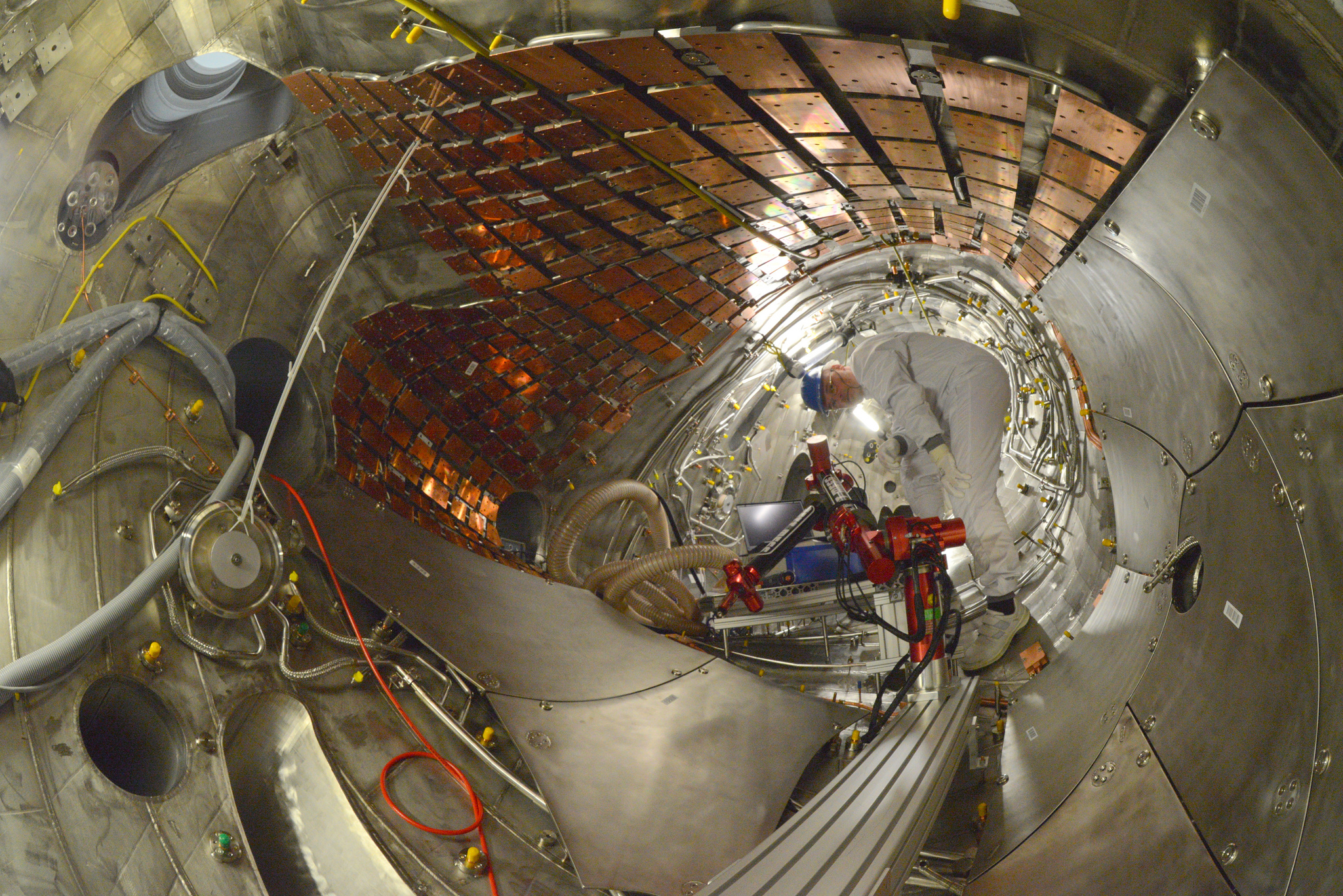
In the years since, it has shown that those sophisticated coil shapes can deliver what they promise at scale: very low neoclassical transport and steadily improving confinement in long, high-quality discharges. It has also set stellarator performance records on key metrics, including the triple product—the product of plasma temperature, density, and energy-confinement time, and a standard yardstick for gauging how close a device is to reactor-relevant conditions.
But even with HSX and W7-X proving that modern stellarators could solve long-standing physics and engineering problems, the path to a power plant still looked remote—largely because stellarators demand extremely strong, precisely shaped magnetic fields, and traditional superconducting magnets made that strength and complexity expensive at reactor scale.
Type One Energy
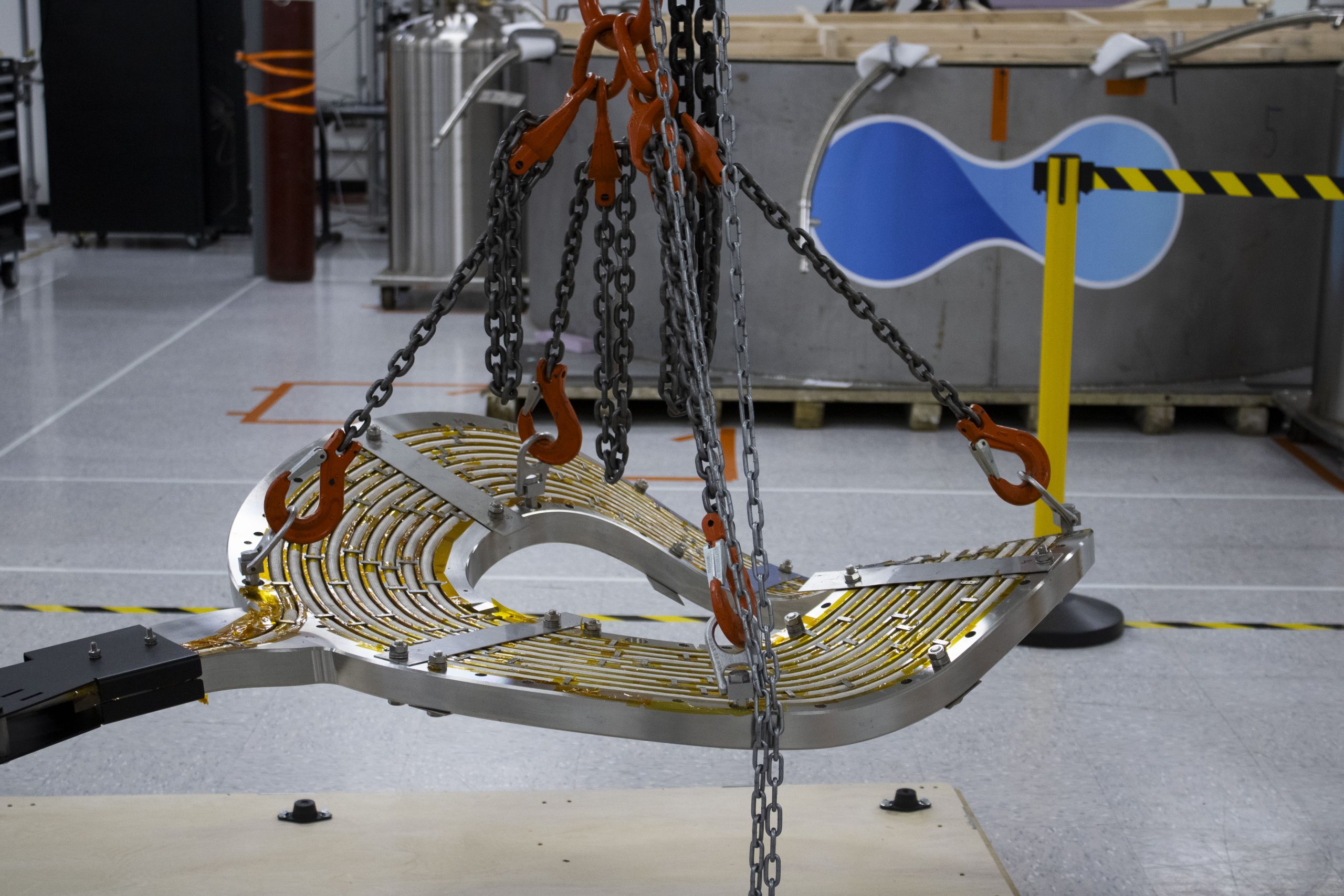
That constraint loosened in 2018, when researchers at MIT’s Plasma Science and Fusion Center helped push high-temperature superconductors into a form factor that fusion engineers could actually build with: long, flexible tape. For fusion devices, that mattered less as a materials novelty than as an enabling technology. HTS tape can carry far more current in high fields than conventional superconductors, allowing smaller magnets to generate much stronger fields.

Commonwealth Fusion Systems built its tokamak design around that HTS tape and the magnet architecture it enables—reaching 20-tesla-class field strength and laying out a machine that targets ITER-like performance at a fraction of ITER’s size. Type One Energy is leveraging that same HTS tape–based magnet stack—essentially borrowing the high-field “hardware” breakthrough and applying it to a stellarator, where field strength and coil complexity are even more central.
With HSX and W7-X supplying the confidence that stellarator geometry could deliver strong confinement, and with HTS magnets making the required fields more practical and compact, a small group of engineers and physicists from those programs concluded the long-standing blocker had finally shifted. In 2019, they founded Type One Energy.
The team is a combination of engineers, scientists, and energy industry leaders, all with extensive experience in fusion–and stellarators, in particular. The CEO is Chris Mowry, former CEO of General Fusion. The Chief of Stellarator Optimization is Chris Hegna, Director of UW-Madison’s Center for Plasma Theory and Computation. John Canik, first author on the 2007 HSX confinement paper, is the Chief Science Officer. David Anderson, who has led the HSX experiment since 1999, is the Chief of Stellarator Engineering. And Thomas Sunn Pedersen, one of five Division Directors at W7-X, is the Chief Technology Officer.
Type One Energy’s goal is stellarator-produced energy that is commercially accessible. Their commercialization program, Project Infinity, is designed to move beyond scientific proof points and into the many facets of implementation: partners, permitting pathways, supply chains, and manufacturable designs.
The Project Infinity Roadmap
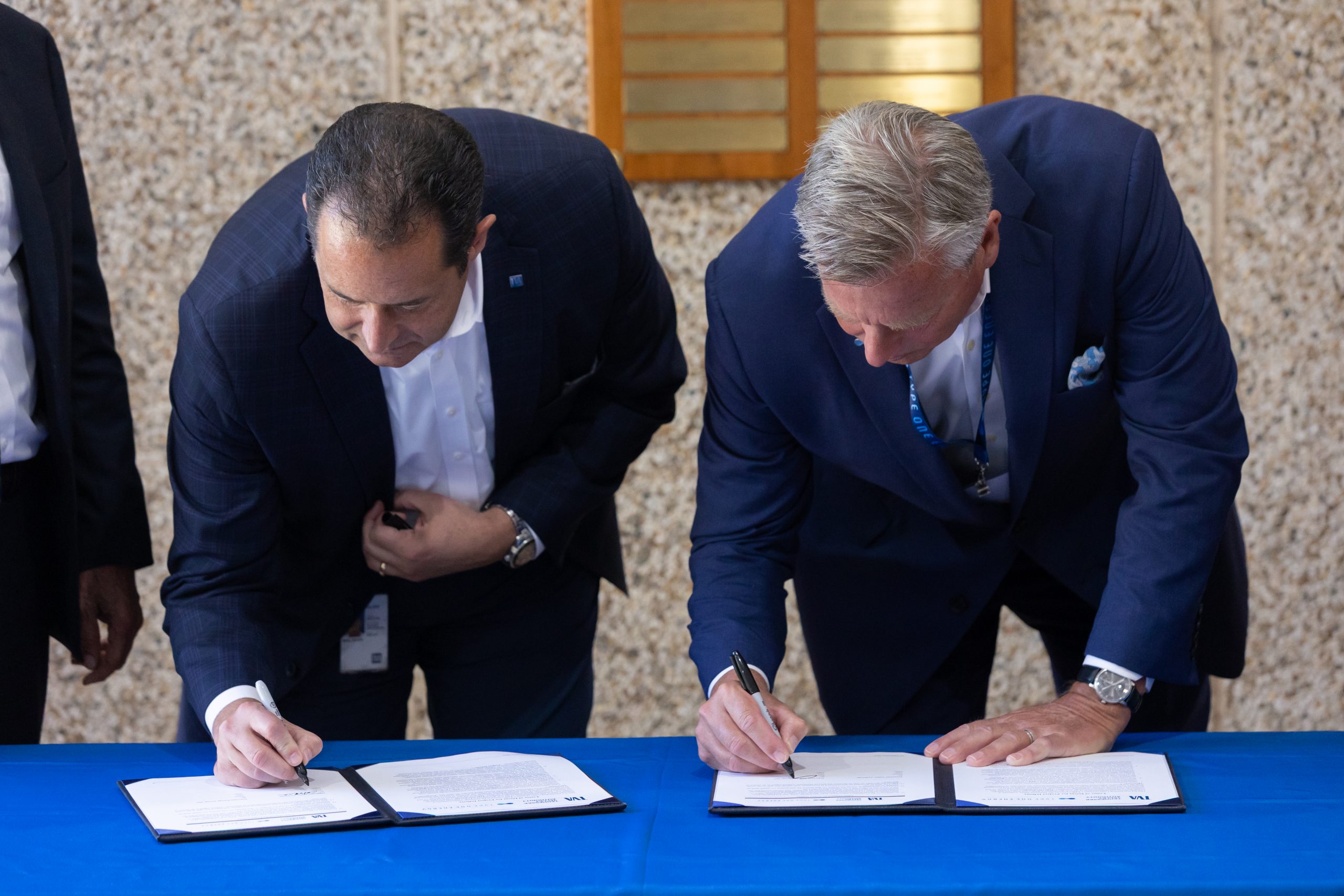
In February 2025, Type One Energy took a major step on that path by signing a cooperative agreement with the Tennessee Valley Authority (TVA) to jointly develop plans for Infinity Two, a nominal 350 MWe pilot plant intended to deliver baseload electricity in the Tennessee Valley region – an unprecedented step for a utility fusion partnership. In September 2025, TVA followed with a Letter of Intent to construct one or more Infinity Two plants at its Bull Run site, and Type One brought in AECOM to lead preliminary design engineering, signaling a shift from “concept and physics” to the front-end work required for a real power project.
Project Infinity is meant to do more than prove the stellarator works on paper. It’s a commercialization roadmap: stress-testing the design against the practical realities of siting, licensing, procurement, and modular construction, while building the supply-chain and manufacturing muscle a first-of-a-kind plant will demand.
From there, Type One Energy sees a pathway to providing power at a cost under $50/MWh, placing it competitive with the most efficient renewables and significantly cheaper than fossil fuel alternatives, as well as heating at a cost under $30/MWh. The total addressable market is projected to exceed $1T annually by 2050.
And it is well on its way. It has already developed Magnet Zero, its HTS magnet prototype, which is currently being tested at MIT PSFC. In 2023, it received $5M from the Department of Energy, the largest amount given to a stellarator company, and it recently closed an oversubscribed $80M+ convertible note funding round, with a $200M+ Series B launching soon.
Helena has demonstrated a believe in the thesis of fusion energy as a key mode of positive civilizational progress, and continues to support the technology’s development. Toward that end, not only has it invested in Type One Energy, is working to accelerate commercialization by connecting Type One Energy with potential utility customers, strategic partners, and fusion supply chain ecosystems.
Helena’s purpose is to identify solutions to global problems and implement them through projects. Each project is a separate, unique effort.
Sometimes, we believe that the most effective method to implement a project is through for-profit action, including investment and/or the founding and operation of businesses.
These projects are designated as “profit” on their associated project pages on this website. This page is an example of such a project.
To implement efforts through for-profit means, entities(s) including Helena Special Investments, LLC, a privately-owned limited liability company that operates in business activities that have the potential to transformatively address societal problems while targeting attractive returns to investors, are utilized.