




Nous
Helena is an investor in Nous Research, an open-source AI lab rewriting the rules of digital sovereignty.
In just three years, Nous has scaled from a grassroots Discord community to the category leader.
Nous’s flagship product, the Hermes Agent, allows users to move seamlessly between hundreds of AI models while retaining ownership of their own work and data. It quickly became the #1 agent on OpenRouter, the industry’s largest marketplace.
In less than a year, Hermes usage reached a scale of more than than two trillion tokens a day.
Hermes is just one output of a broader research engine designed to break AI’s most expensive bottlenecks. Nous’s open-source innovations have dramatically expanded how much information models can process at once, generated new frameworks for autonomous self-improvement, and created pathways to advanced model training outside the confines of centralized data centers.
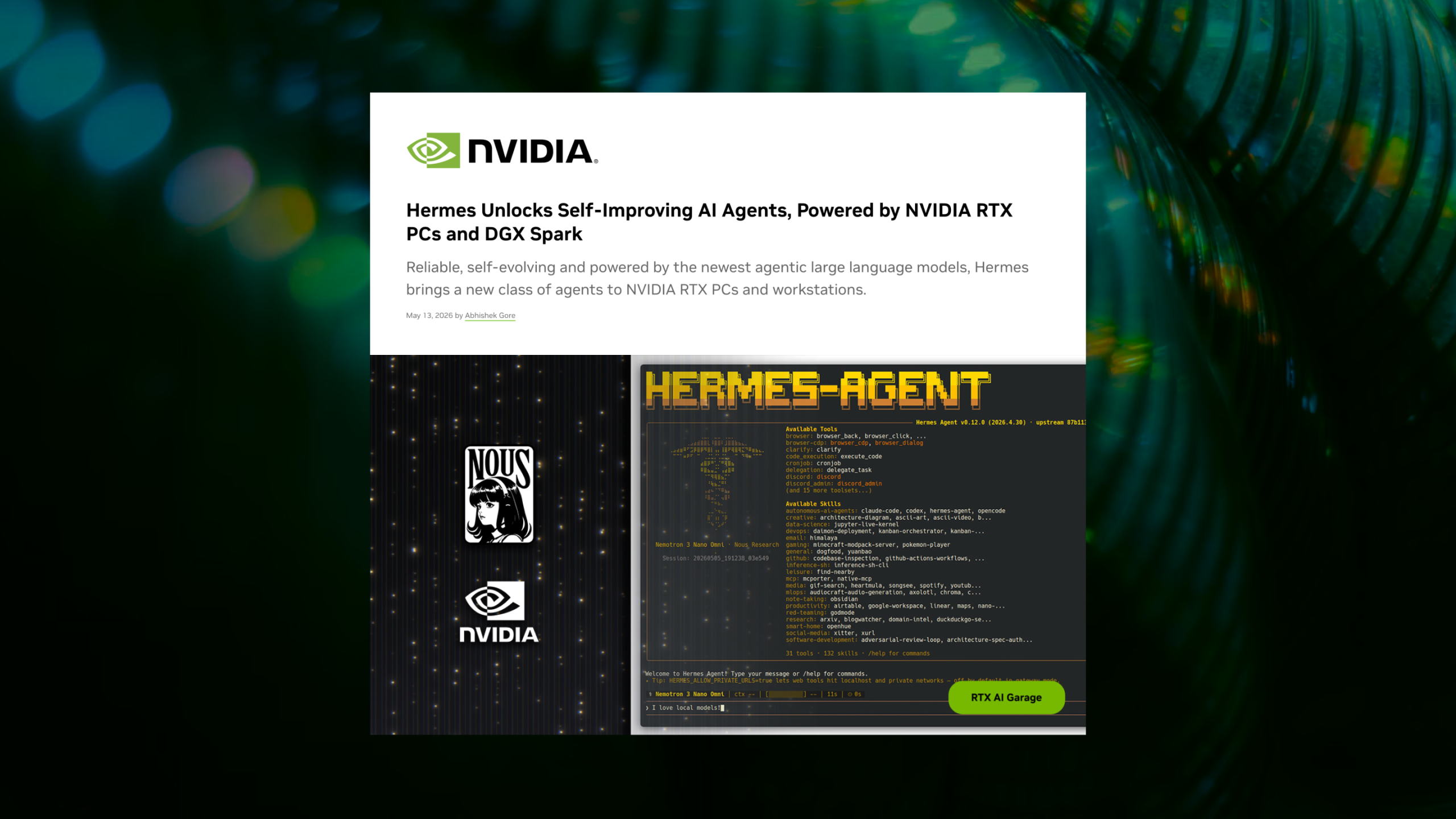
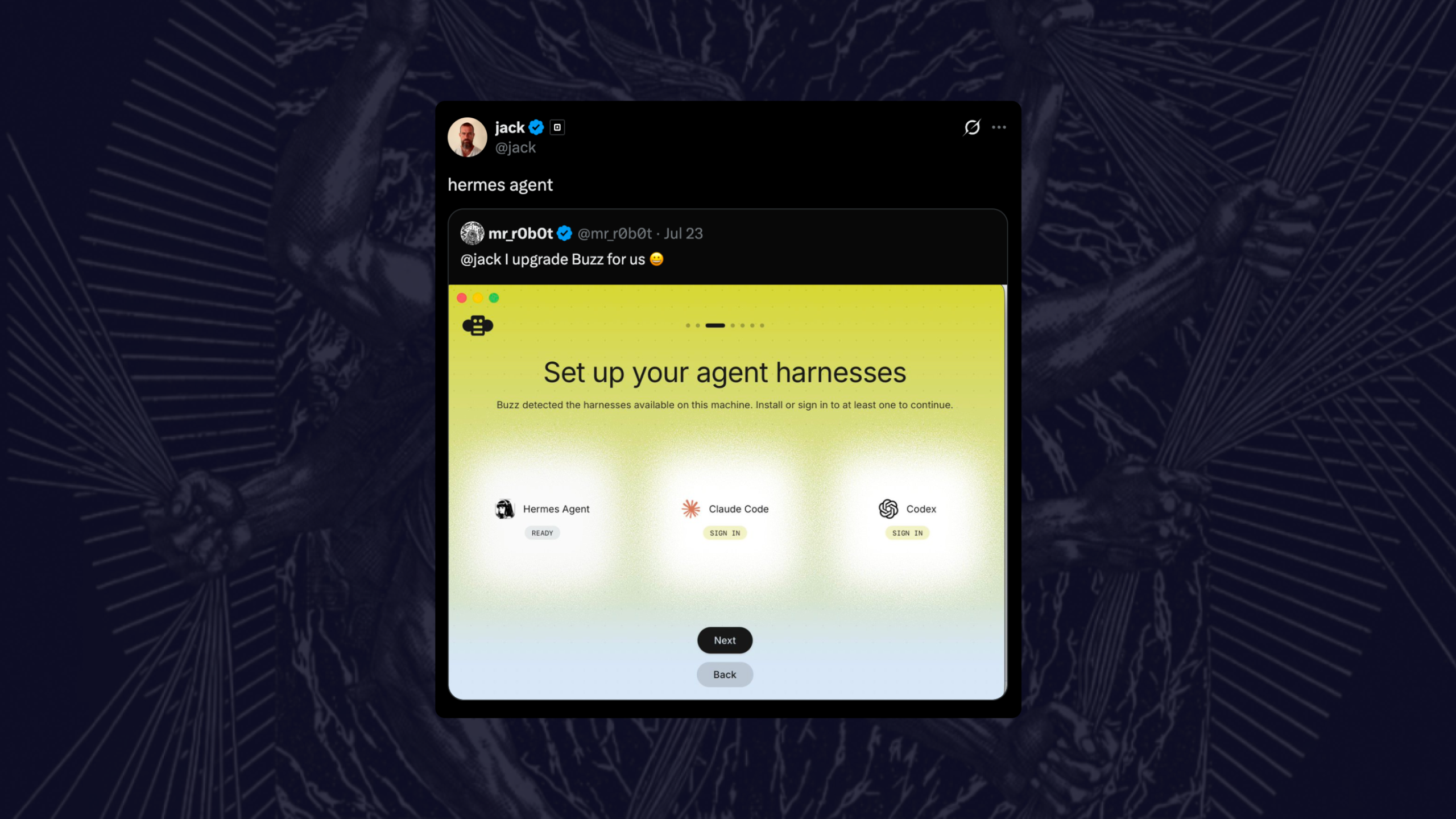
Those breakthroughs have translated into broad industry adoption; Nous’s technologies have been incorporated into models and platforms from NVIDIA, Microsoft, OpenAI, Alibaba, and DeepSeek. Hermes itself has garnered public attention from some of the field’s most prominent figures, including Jensen Huang and Jack Dorsey.
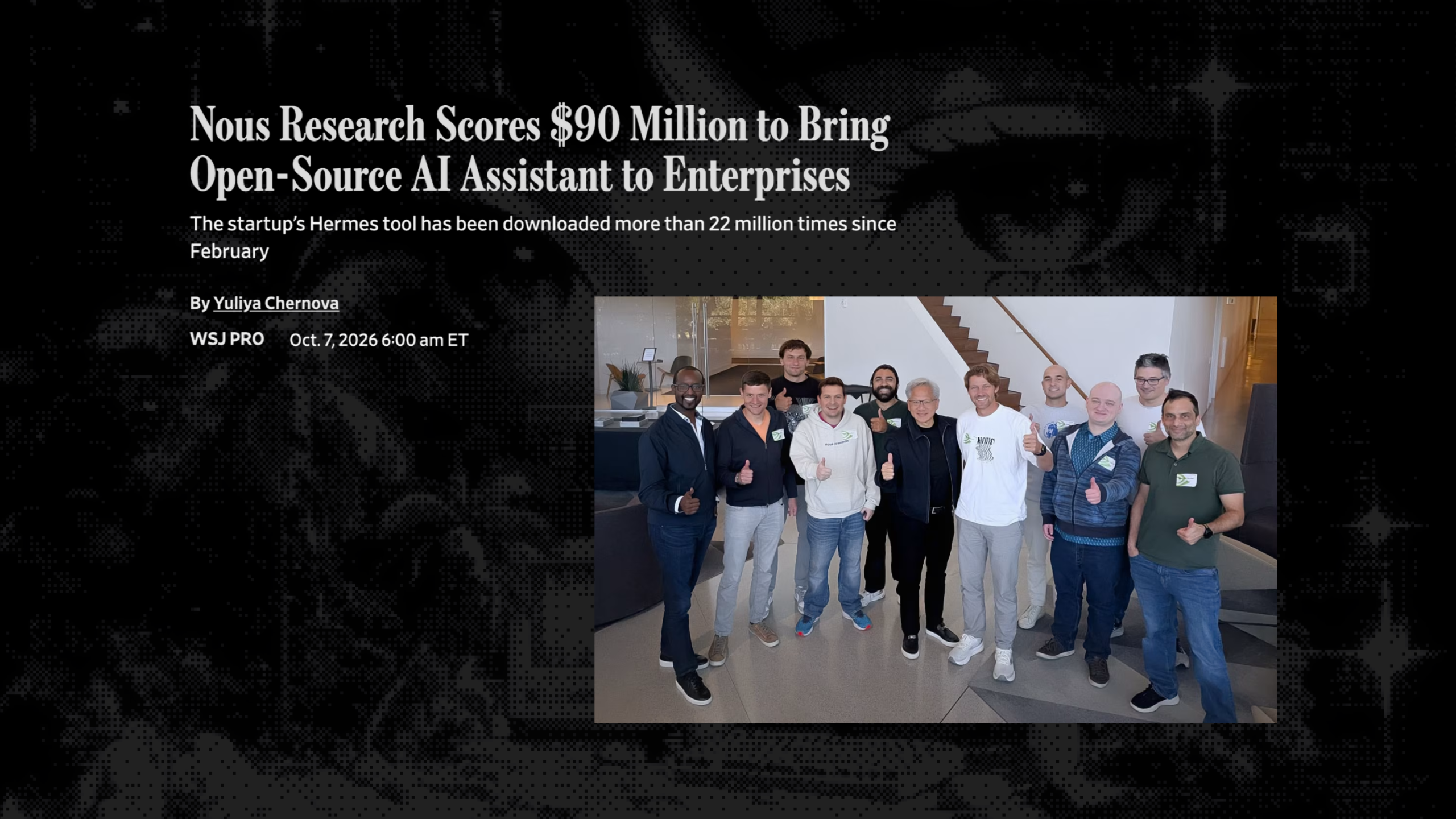
With $90 million in Series B backing, Nous Research is now positioned to offer more individuals, institutions, and businesses the freedom to choose how they use AI, own what they build with it, and help chart a course toward a more equitable AI future.
An Open or Closed Future
On November 9, 1994, a software engineer named Phil Zimmermann was detained by customs agents at Dulles International Airport and interrogated at length about his illegal trafficking of “dangerous munitions.” But Zimmermann wasn’t accused of smuggling guns or explosives.
The dangerous munition in question was a computer program.
Three years earlier, Zimmermann had written a piece of encryption software that he called Pretty Good Privacy, or PGP. He sent copies to a few friends, who in turn shared it on Usenet newsgroups, the spiritual precursors of Discord. PGP soon caught the attention of a loose community of cryptographers and privacy activists who called themselves cypherpunks, avatars of the anti-establishment ethos that helped define this early era of the internet.
Within days, PGP had spread worldwide.
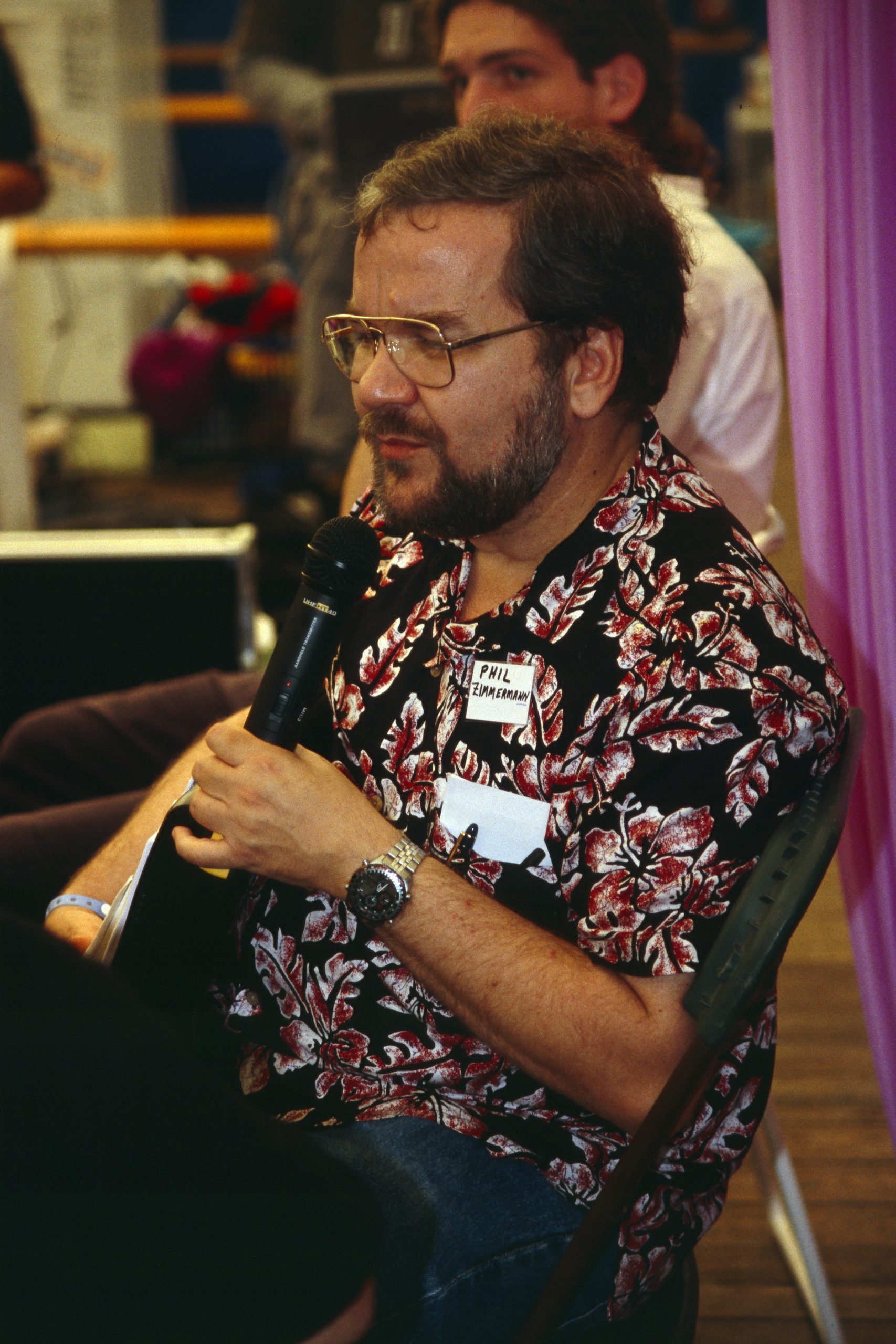
The problem for Zimmermann was that under Cold War-era regulations, encryption software like PGP was considered a munition, in the same category as fighter jets and cluster bombs.
Zimmermann’s years-long legal battle with the United States government became the central flashpoint in what’s now remembered as the crypto wars: the fight over whether encryption software would be tightly controlled by the government or openly available to the online public.
The eventual loosening of government restrictions allowed the widespread proliferation of encryption technology. Today, it protects everything from Wi-Fi networks to cryptocurrency transactions – not to mention the browser session you are using to read these words.
But the contest over whether emergent digital technologies coalesce around an open model, in which all are free to use and adapt them, or a closed model, in which control is maintained by government or select corporations, is one that plays out again and again: the open web against AOL’s gated network, community-built Linux against Microsoft’s Windows, open-source Android against Apple’s iPhone.
Today, the same contest is unfolding around artificial intelligence.
AI has moved with blinding speed from a speculative proposition to an essential layer of modern life. The FDA approved 223 AI-enabled medical devices in 2023, up from six in 2015. Waymo, which trains its driverless taxis in AI-generated simulations of the road, now provides more than 500,000 fully autonomous paid rides per week. Nearly four in ten working adults report using an AI chatbot on the job, and more than half of American college students use AI for their coursework. And increasing numbers of people are trusting these systems with the most sensitive details of their lives. One in five Americans has turned to a chatbot for medical advice, and one in ten for emotional support.

The pace of AI adoption has exceeded the broader public’s comfort with it. In a 2026 Pew Research Center survey, 63 percent of Americans said AI is advancing too quickly, and those who expect it to harm society over the next two decades outnumber those who expect it to help by more than two to one.
In the public discourse, this discomfort crystallizes in the form of anxieties ranging from privacy concerns to economic disruption to species-wide extinction. But the preoccupation with what to worry about (and how much) tends to obscure a more fundamental question: Who decides how AI is built and used?
Increasingly, the answer is a very small number of companies.
Control over AI is rapidly concentrating within a handful of closed frontier labs, OpenAI, Google, and Anthropic chief among them. They are able to build the most sophisticated models and distribute them within their own software. OpenAI’s ChatGPT, Google’s Gemini, and Anthropic’s Claude together account for about 90 percent of all visits to AI chatbot websites. And according to Menlo Ventures, these three companies account for 88 percent of enterprise use of AI models. In an April 2026 Zapier survey of U.S. enterprise executives, more than a quarter said they rely on a single AI vendor for most or all of their operations, and just 6 percent said they could carry on without interruption if their primary AI provider disappeared.
If this trend continues and artificial intelligence does fully consolidate within closed labs, the decisions over how to manage its risks, whatever form they take, along with any other choices about what AI should do and who can access it, will be made by the leaders of a handful of corporations.
Yet AI consolidating inside a closed system is not a foregone conclusion.
Nous Research offers an alternative.
Human Control of Artificial Intelligence
Nous Research began as a community on a Discord server, a loose and largely anonymous collection of self-taught savants and professional programmers, taking a break from their day jobs to work on open projects. The group fine-tuned open-source language models and invented new methods for training them, working collectively and without compensation, united by a democratic vision of AI technology controlled and shaped by all.
Nous Research formally incorporated in 2023. Three years later, based on a series of tools that the larger industry quickly adopted, Nous became a $1.5 billion company.
The company’s flagship creation, Hermes Agent, both encapsulates its ethos of individual sovereignty over AI and demonstrates that this approach can yield better technology.
AI models like Google’s Gemini or OpenAI’s GPT are, on their own, fairly limited. They take in text and they produce text. What expands their utility beyond that of a chatbot is what’s known in the industry as the harness: the software wrapped around the model.
When a user asks Gemini to, say, summarize the unread emails in their inbox and draft replies, the harness packages the request, sends it to the model, and then carries out the model’s instructions: opening the inbox, pulling up each unread message, saving the drafts, and so on. And when the job is done, the harness keeps a record of the work and decides what to bring into the next task. It is the combination of harness and model that makes AI agents so powerful.
If most people aren’t familiar with the harness layer, that’s because the frontier labs blur the line between harness and model by bundling the two together, packaging a proprietary harness with a proprietary model and combine them as a single offering, right down to the name of the product. “Gemini,” for instance, refers both to the model and the app built on top of it.

Hermes Agent is a harness, but one that operates differently from most closed-lab alternatives. Rather than restrict users to a single model, it allows them to choose freely from among hundreds, making their own decision about which model will work best for a given task. As the user works, Hermes Agent develops skills in the background, which the user owns. And while most closed agents keep a user’s work history on their developers’ servers, Hermes Agent stores this data on the user’s hardware, and again, treats it as the property of the user who created it.
In short, Hermes Agent gives users the freedom to decide which model they want to use and allows them to own all the results of their own work.
The practical benefits of Hermes Agent – the lack of restrictions on which models to use, the ability to keep their skills and work history when they switch providers – were quickly recognized by developers around the world. Within three months of its release, Hermes Agent collected more than 140,000 stars on GitHub, the world’s largest platform for sharing code, and became the most-used agent on OpenRouter, the independent marketplace for AI models. By the summer of 2026, it was the most-used app on OpenRouter of any kind.
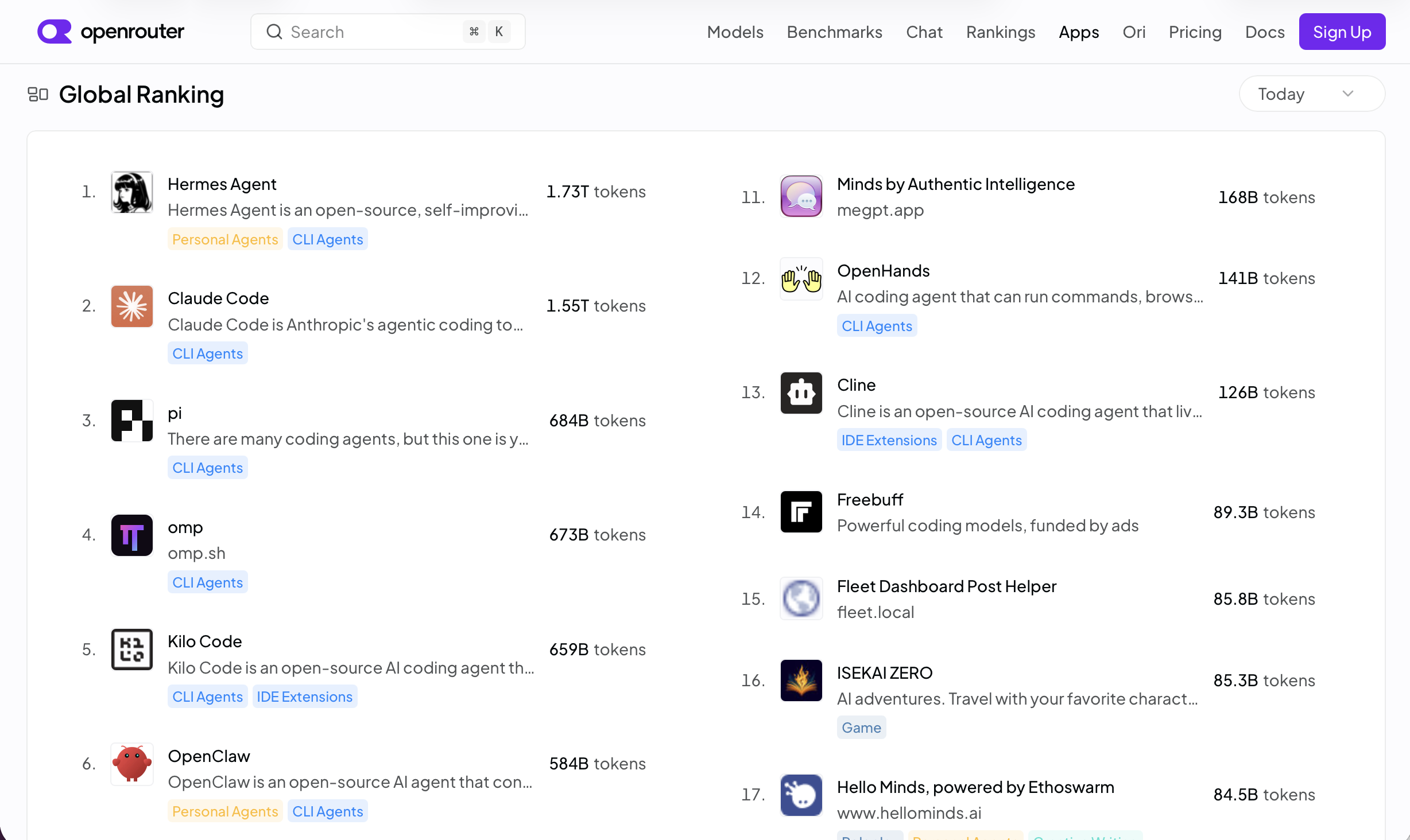
As of November 2026, Hermes processes up to two trillion tokens a day, has processed more than 52 trillion tokens in total, and has been downloaded over 22 million times.
The largest organizations in the AI industry also recognized Hermes Agent’s value, incorporating it into their own products. NVIDIA featured Hermes at Computex 2026 and optimized it for DGX Spark, its desktop AI supercomputer. Microsoft named Hermes a partner for its new Windows security platform. And Nous built an official integration with Buzz, the open-source workplace platform from Jack Dorsey’s Block.
Better and More Accessible Technology
Like most of its open-source predecessors, Nous Research lacks the resources of its closed-organization counterparts. But this ostensible limitation has led Nous to a series of breakthroughs that have made building AI systems cheaper and more accessible for everyone.
Training a large language model requires thousands of GPUs working in concert, constantly exchanging gigabytes of data many times a minute, for months on end. This is why frontier models are conventionally developed in vast, energy-hungry data centers, where GPUs can be physically wired together. Only direct, specialized connections can move the necessary data fast enough.

In 2024, Nous devised an alternative. DeMo has each GPU share only the most significant portion of its work at a time, shrinking the necessary exchange between GPUs roughly 4,000-fold. With so much less data to move, sizable models could be trained over ordinary internet connections. This breakthrough formed the basis for Psyche, a network that uses DeMo to train models on a wide range of hardware located all over the world.
Nous achieved something similar in the area of reinforcement learning, the fundamental process of improving AI models by having them attempt tasks and feeding the results back into training. Reinforcement learning typically requires creating sophisticated practice environments where a model can attempt complex challenges; systems that can run and record thousands of attempts simultaneously; and scoring mechanisms to evaluate each outcome. As a cheaper alternative, Nous created Atropos, an open-source framework that runs on widely used software, allowing smaller teams or even individual developers to create practice environments, track a model’s attempts, and evaluate them at scale. Nous reports that training with Atropos nearly quintupled the accuracy of one of its models on a leading benchmark.
Nous also found a way around one of the practical limitations of earlier language models: how much text they could take in at once. In 2023, most open models could read only a few thousand words at a time before losing the sense of what they were processing. Extending that limit conventionally meant retraining the model on vast numbers of long documents, a cost few outside the frontier labs could afford. Nous’s alternative, called YaRN, recalibrates the model’s internal map of word positions, extending it to cover far longer texts. The result is a model that can read documents many times longer than before, with roughly a tenth of the additional training previous methods required. YaRN has since been built into some of the most widely used models in the world, including DeepSeek V3, Alibaba’s Qwen, Moonshot’s Kimi, and OpenAI’s own open-weight model, GPT-OSS.
In all these cases, Nous developed new frameworks that the frontier labs – who benefit from the high costs and closed infrastructure that limit competition – had little reason to pursue. Founded on the belief that intelligence should be a public utility rather than a corporate asset, Nous operates according to an entirely different set of incentives. And because its open-source offerings enable more people to push AI technology forward, the results become self-reinforcing: more developers achieve fresh breakthroughs while democratization helps advance the field as a whole.
In October, Nous closed a $90 million Series B, achieving a $1.5 billion valuation with participation from Helena alongside NVIDIA, Microsoft’s venture fund M12, and Samsung. Nous is deploying this new capital to expand its open-source ecosystem directly into the enterprise market. This includes the release of Hermes for Businesses, a commercial version of Hermes Agent that allows companies to build their own internal intelligence stacks while retaining control over their proprietary data and institutional knowledge.
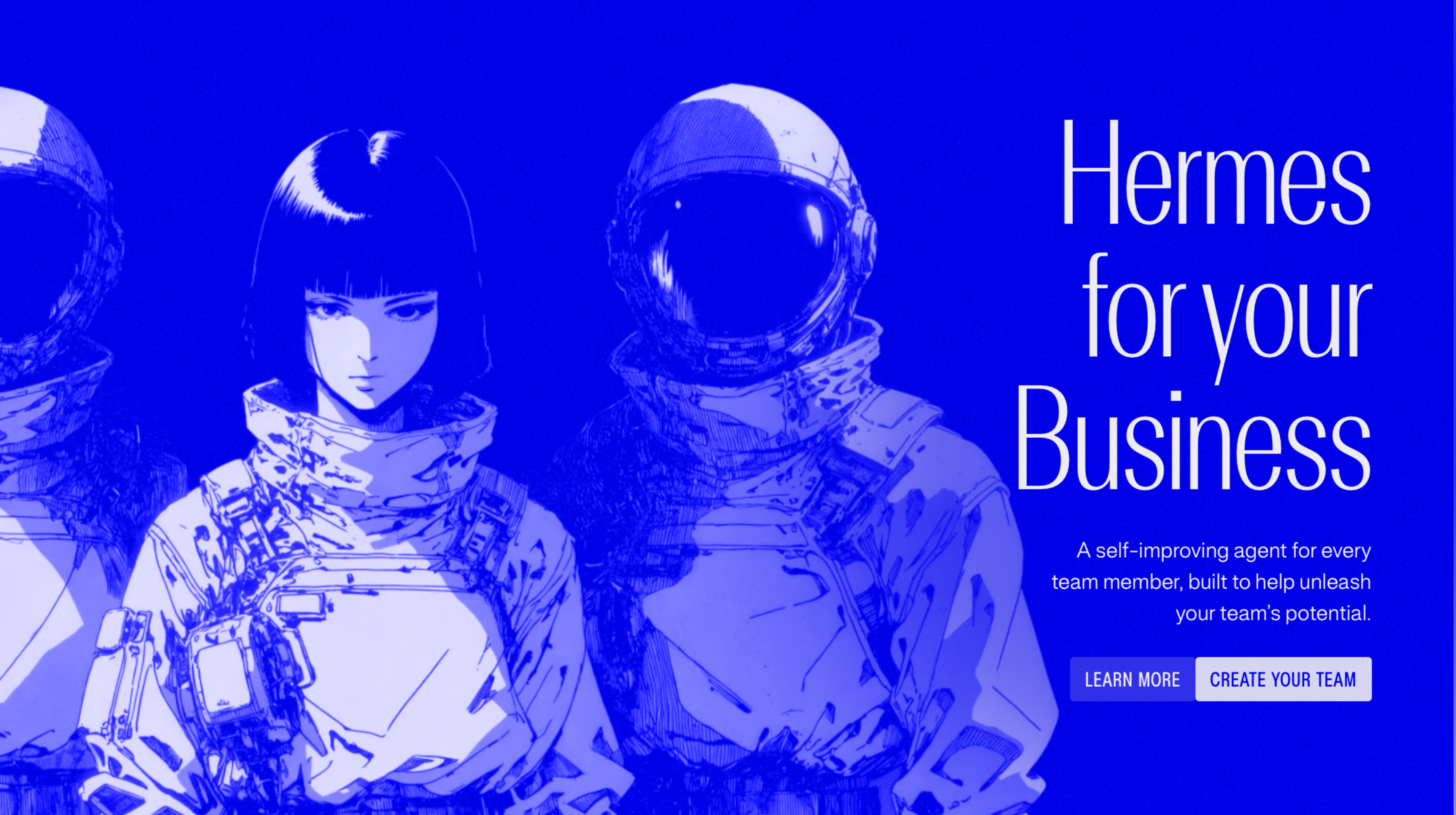
When Phil Zimmermann wrote PGP, he never could have predicted the forms encryption would take or how deeply it would be embedded within modern commerce, communication, medicine, and national security. Likewise, no one today can predict the future course of AI, a potentially far more transformative force that is already remaking modern life. Whatever its trajectory, Nous Research is working to ensure the most powerful technology of our time belongs to the people who use it.
Helena’s purpose is to identify solutions to global problems and implement them through projects. Each project is a separate, unique effort.
Sometimes, we believe that the most effective method to implement a project is through for-profit action, including investment and/or the founding and operation of businesses.
These projects are designated as “profit” on their associated project pages on this website. This page is an example of such a project.
To implement efforts through for-profit means, entities(s) including Helena Special Investments, LLC, a privately-owned limited liability company that operates in business activities that have the potential to transformatively address societal problems while targeting attractive returns to investors, are utilized.
Helena’s purpose is to identify solutions to global problems and implement them through projects. Each project is a separate, unique effort.
Sometimes, we believe that the most effective method to implement a project is through non-profit action. These projects are designated as “non-profit” on their associated project pages on this website. This page is an example of such a project.
In these cases, Helena operates projects that are led and funded through non-profit entitie(s), including Helena Group Foundation. Helena Group Foundation is a nonprofit, 501(c)(3) organization formed to conceive and operate projects that solve important global issues for the benefit of society.