Why The West Rules ~ For Now
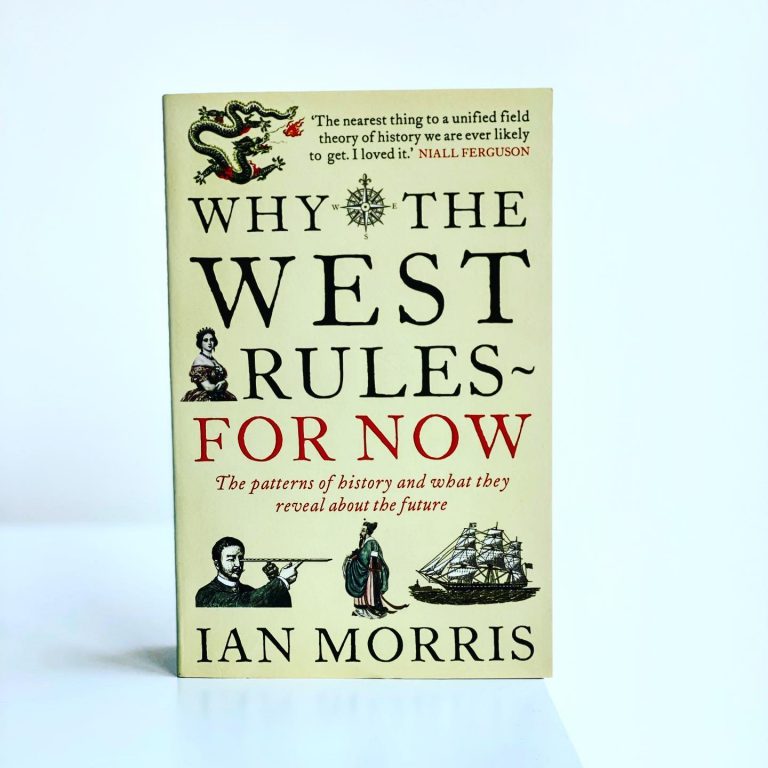
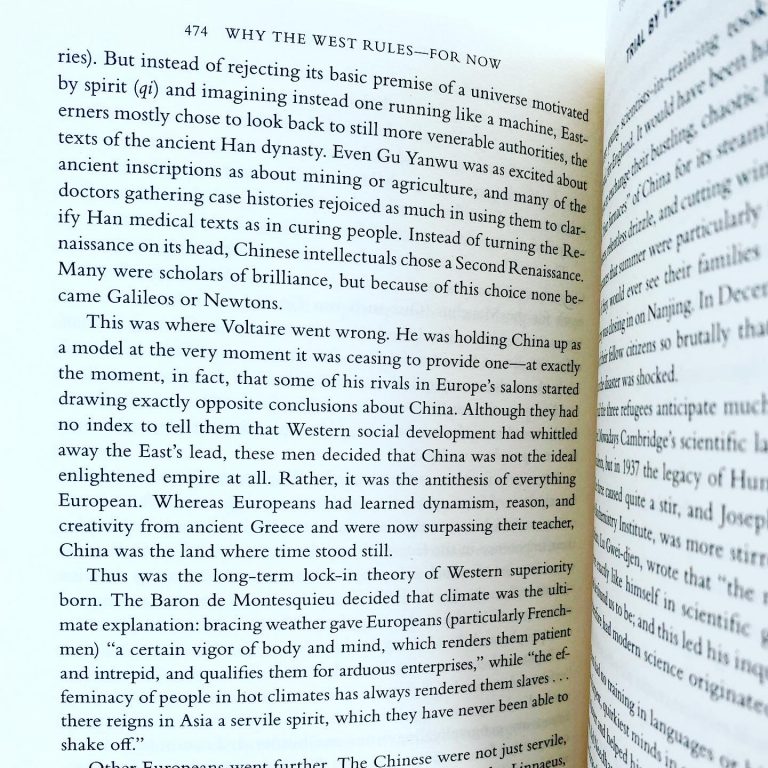
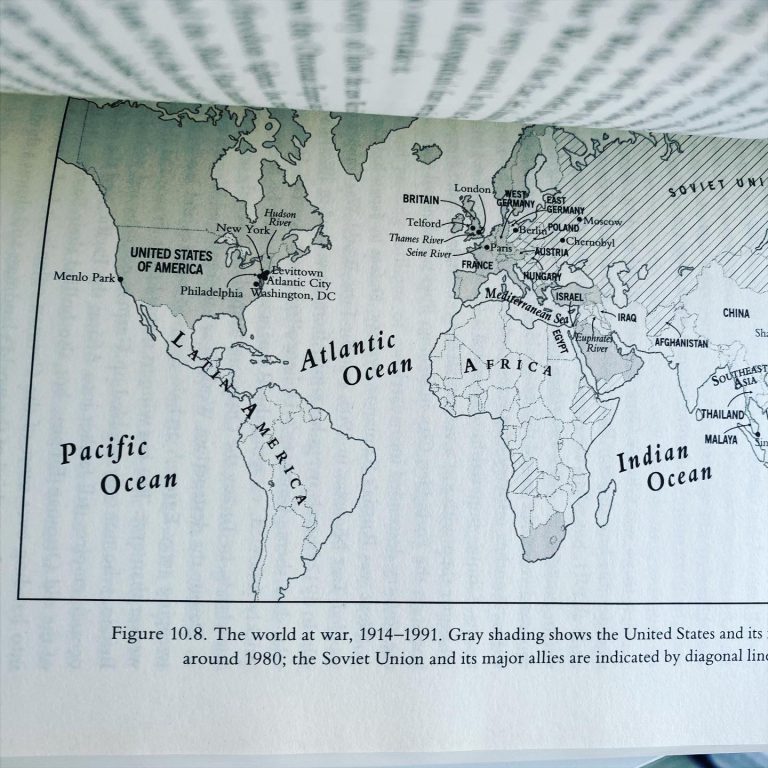
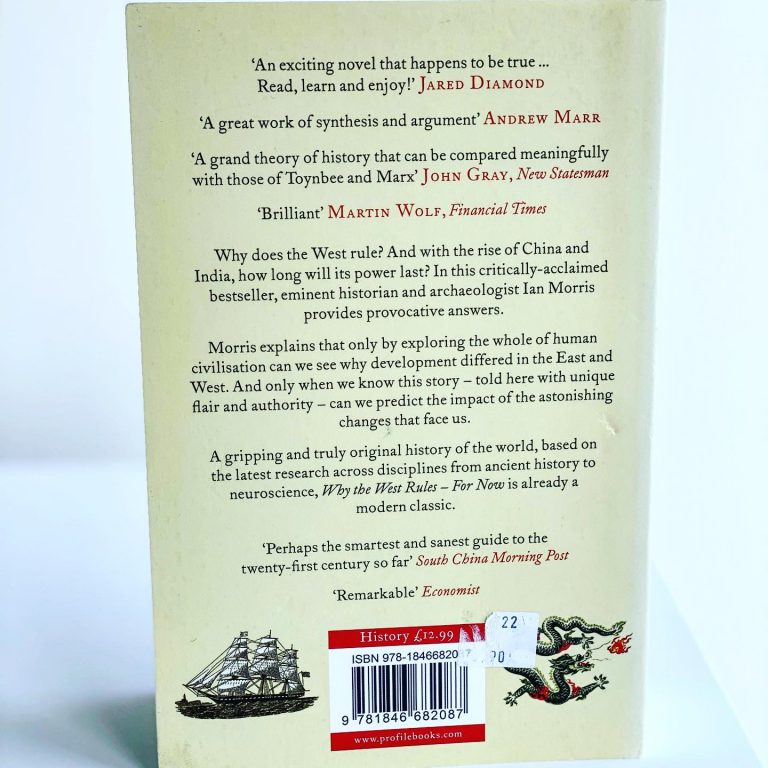
- Form: Paperback
- Purchase Link
- Page Count: 790
I admit that over the last two and a half weeks (since a bit before early December), I’ve faced a my first “rut” since really focusing on reading nearly 2 years ago. I chalk it up to two things: a combination of work//social stress and the choice to take on a few very long and challenging books in parallel. There is a bit of malaise that comes after reading for many hours, yet seemingly advancing little in a book that I thought I had control of, but came back to bite me.
.
This was one of those books. I originally picked it up while in Hong Kong, and was fascinated by the premise. Morris, with a background in archeology, takes on the extremely ambitious task of writing a world history of both the “east” and the “west” (even defining those terms, as Morris notes, is challenging), then comparing the two as they converge.
Most of the book focuses on ancient history, and begins to speed up around 1400. Morris spends so much time in the far past because he feels that much of the systemic underpinnings of development occurred then, and were not necessarily human-decided but rather geologic. The book’s real value is there, in Morris’ exhaustive exploration of ancient crop yields, natural climate trends and its relationship to human migration, and the spread of religion through trade routes.
It is, therefore, a quite refreshing angle on a topic that dominates most of contemporary political discourse. I wouldn’t recommend the book to someone who is not highly interested in the topic, mostly due its depth. But if you really want to develop an opinion on modern geopolitics, this is the type of book that will provide some of the painstaking background analysis you need.