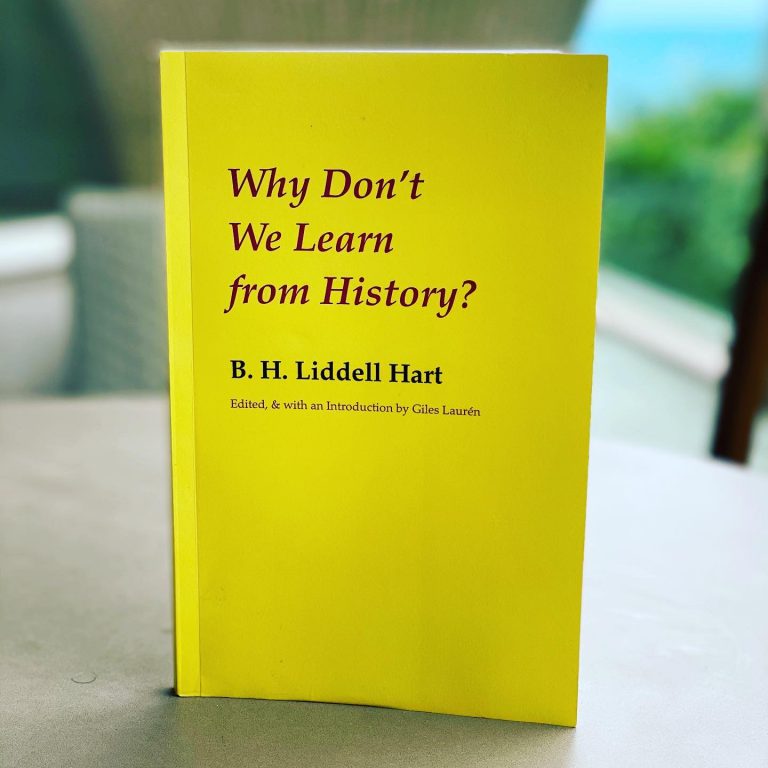
Why Don’t We Learn From History?

- Form: Paperback
- Page Count: 126
- Purchase Link
This was my first actual Liddell Hart book, although he has been a topic of discussion in past works I’ve read on geopolitics, history, strategy and war (and not always in a positive light). This topic, though, about why patterns of history, even if they are understood, are over and over not learned from or acted upon, is a fascinating and pertinent one.
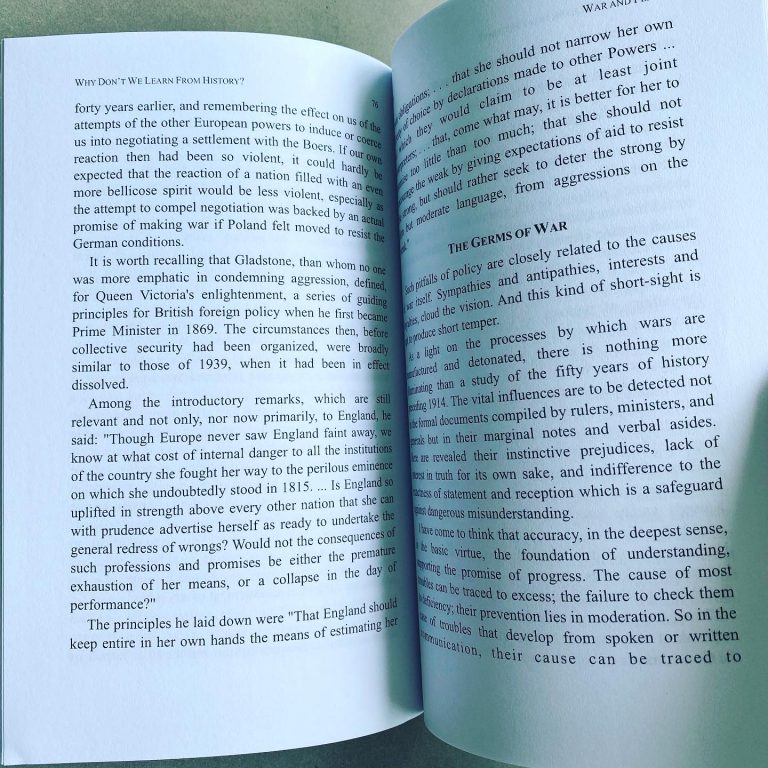
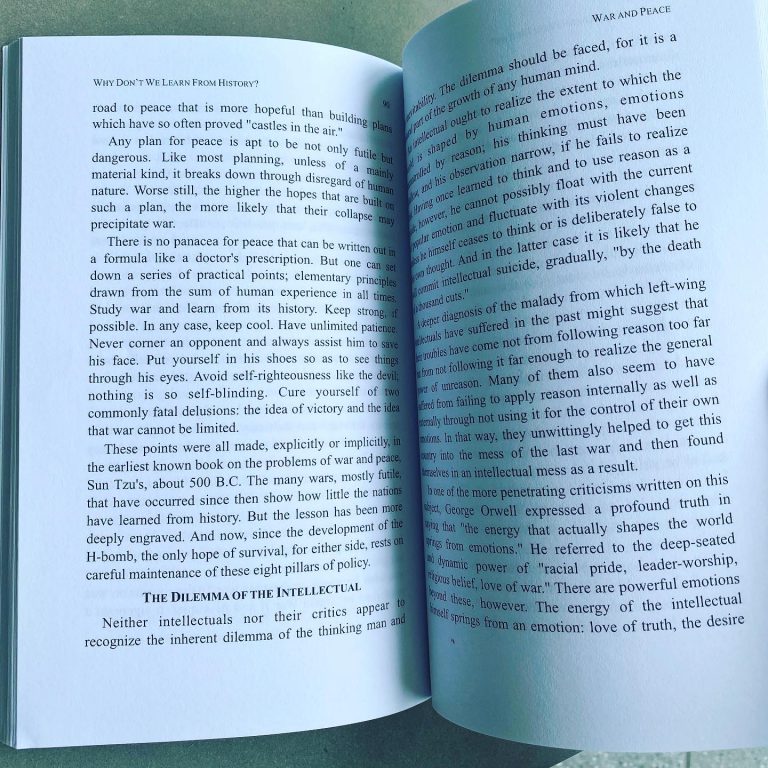
Hart’s answer is, in short, emotion. That while logical thinking and action has risen in its comparative share of collective the human mind with the forces of scientific development, dispassionate analysis still plays second fiddle to emotional thinking. And thus, we do not learn from history because we fundamentally don’t care to pay attention to it in the first place. Even when we do, it is as a data set to cherry pick from, a world that is accessed from the vantage point of selfishness and close-mindedness.
It doesn’t matter that Sun Tzu correctly deduced more than 2,500 years ago that a critical path to de-escalation is to leave the enemy a point of retreat: generations upon generations have not, at least in the majority, are persuaded by heart rather than brain, and thus they make the mistake of Napoleon more often than the wise course of Wellington. And were Hart to be alive today (this is a book written in the late 1960s), he would not be shocked by our present situation.
This of course begs the question of whether humanity is doomed to think from the “rat brain,” poisoned by the well of self-interest, short-term revenge fantasy or distraction. Whether we as a species are genetically predisposed to this critical weakness. My hope is that we are not, and that the consistent human project of rational thinking, scientific endeavor, and the hard work of making sense of an ethical framework (a pursuit that will never yield a perfect result) will at some point win out over the negative forces of emotion. Or better yet, that we will merge emotion with rationalism, and find more spiritual motivation to pursue fact rather than twist it for our own purposes.