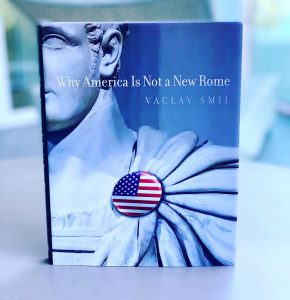
Why America is Not a New Rome
- Form: Hardcover
- Page Count: 226
- Purchase Link
It has been an intellectual tradition for at least the last few decades to liken America to that of Ancient Rome: to state that they are both empires, that their composition, institutions and structures are strikingly similar. These comparisons often end in a statement about the “fall” of Rome; that America, Rome’s sister society, holds the same unique properties, and thus is beginning to crumble and fail from the same playbook.
Vaclav Smil, an interdisciplinary thinker across biology, energy and environment, as well as a classically trained expert on Rome and ancient civilization, was so clearly bothered by the prevalence of these comparisons that he dedicated an entire book on dismantling them. The short version of my impressions after reading it is that he is absolutely correct.
Smil pulls no punches and does his best to work without emotional bias (although he has his slip-ups). His most devastating blows to the theory come in an unexpected way: minimizing the actual power of both Rome and America at their peak. It is clear, Smil writes, that Rome was an Empire, but it was an Empire that didn’t necessarily stand alone, even in its own time (see the Han dynasty’s similar size, population and GDP). Even harsher treatment is given to the notion that America is a modern day “empire” — Smil shows that the better word is “hegemon”, and a weak one at that.
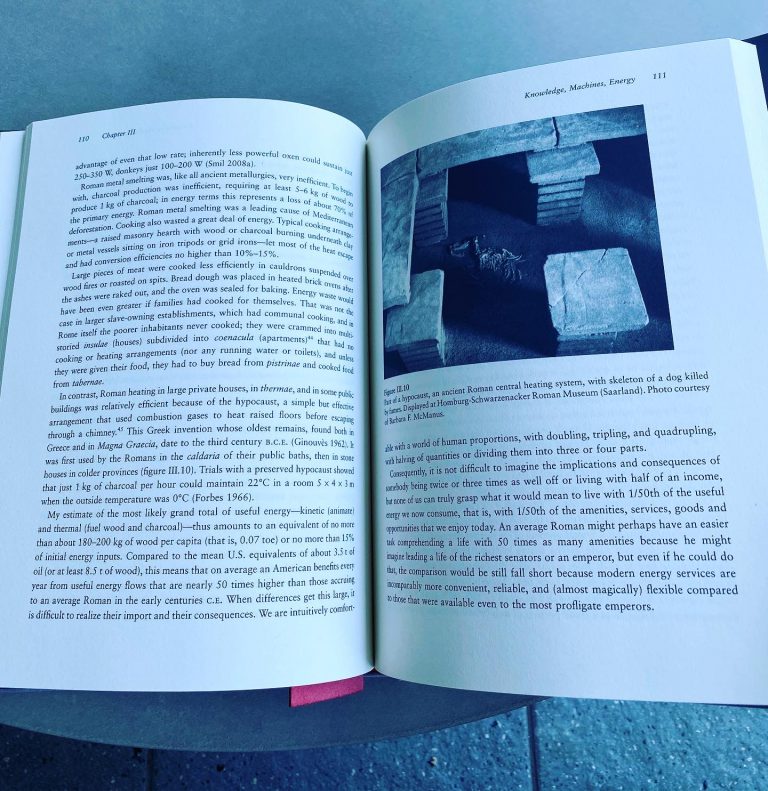
A decent portion of this book is fascinating, but also of weaker service to Smil’s argument. The author goes into depth on the orders of magnitude of difference in daily life of the average Roman versus American across multiple metrics including life expectancy, public health, energy production, living conditions, and mobility. He does so partly to accentuate the differences between both societies, but the argument is a bit too obvious (any present day civilization compared to a 2,000+ year predecessor will have such relative differences) and it feels like Smil is more indulging himself with his favorite fields of study with these sections than progressing the argument. I’m not complaining — even these parts of the book are valuable for general understanding.