Thomas Jefferson and the Tripoli Pirates
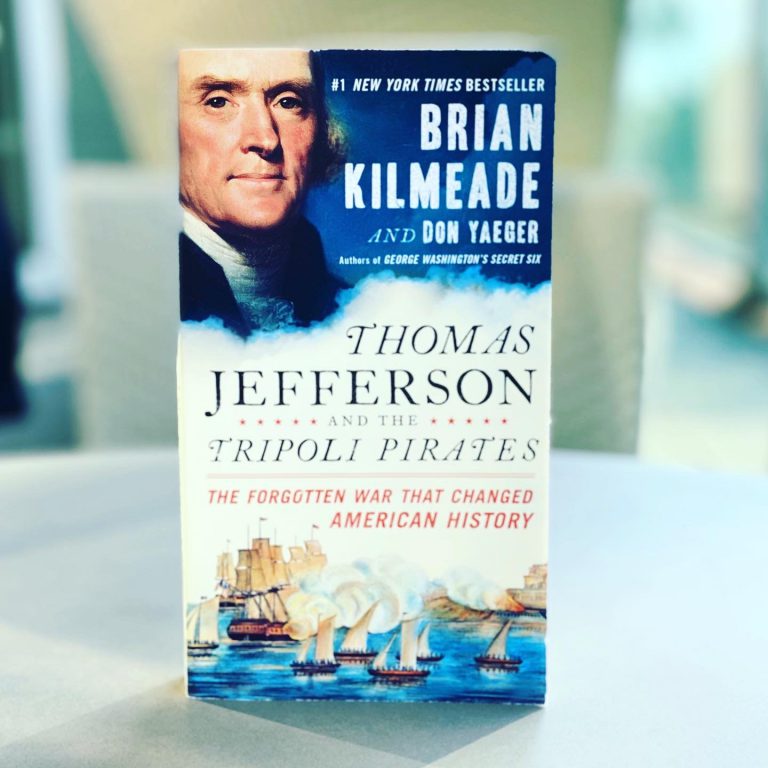
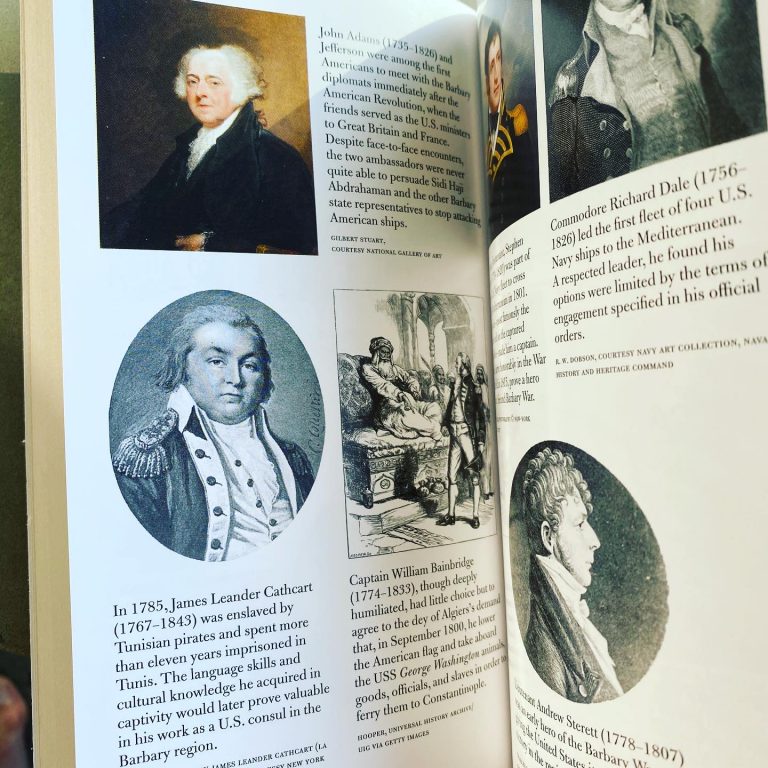
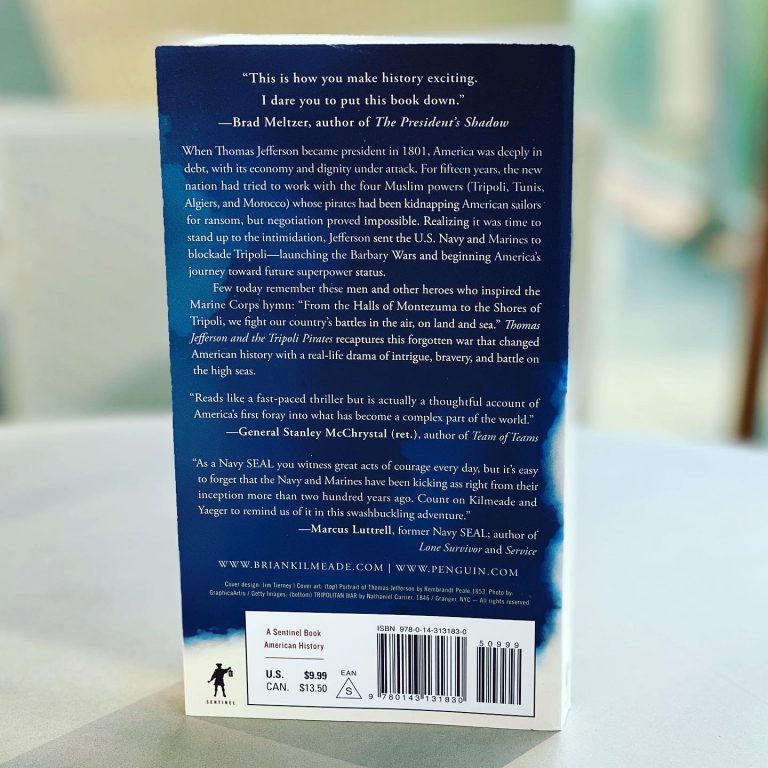
- Form: Paperback
- Page Count: 273
- Purchase Link
The late 18th-Century conflict between a very young United States and the Tripolitans (known by us Americans as the Barbary Wars, but I suspect not enthusiastically by the receiving end of those being called Barbarians) was indeed a crucial point of American history that helped shape the early foreign policy positioning of the States and the image of America internationally as a growing naval power and respected military state. It is also true, as authors Kilmeade and Yeager note throughout the book and in the subtitle, that the Wars are more or less forgotten by Americans today. To best understand the War of 1812 and early American history, not knowing or understanding this conflict of serious detriment.
I will admit that I didn’t find this particular book, however fascinating it’s subject matter, to exactly be a work or literary genius. The authors are very enthusiastic and dramatic in their writing, which does help in getting the book out to a wider audience. But in its bombast, quite a lot of nuance is lost. The book’s story arc, which repeatedly simplifies the conflict into a story of religious turned naval battle between Islam (Tripolitans) vs Christians (the US), beyond being a bit of a reach to perhaps find parallels to middle eastern conflicts of today, is also in multiple areas just not factual. Jefferson is purported in the book, for example, to have only a cursory understanding of (and simplified dislike and rejection) of the Quran, when in reality Jefferson’s relationship and curiosity with the Quran and Islam, and how that shaped foundational American policy during this age, has entire volumes written about it (see “Thomas Jefferson’s Quran by Denise Spellberg. Jefferson absolutely held a net-negative view of Islam, shaped in part by Voltaire (and the story of why is fascinating), but this book breezes by the quite complex relationship he had with it, and it’s implications.
Beyond that, the Barbary Wars had a lot less to do with religion and a lot more to do with money. The Tripolian were making a killing off of bribing European and Western nations in other to give them safe trading passage — so much so that Sweden had already been in a prolonged war with them over this same issue, that the United States more or less joined, rather than beginning this war from scratch. It isn’t clear at all that, we’re America to be a non-Christian state at the time, Tripoli would have behaved in any different way. It is true, as the authors note, that the Tripolians frequently flouted diplomatic norms, didn’t abide by the conventions of war, and certainly behaved in a way justifying the US to engage with them (Tripoli also declared war on the US first). But I wish this book would have spent a bit more time on that, rather than pushing what ended up being a bit of a tiring religious narrative.