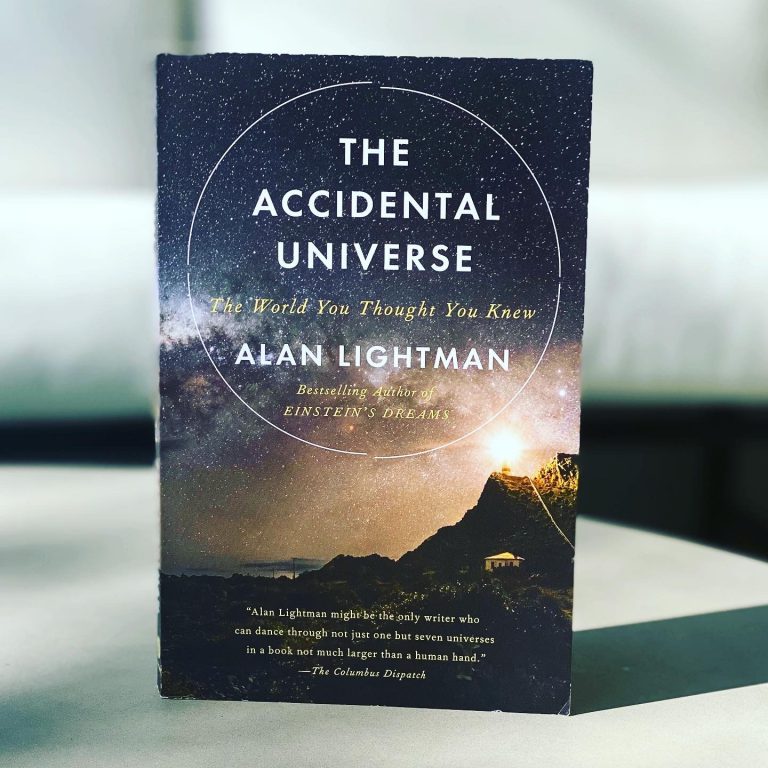
The Accidental Universe
- Form: Paperback
- Page Count: 167
- Purchase Link
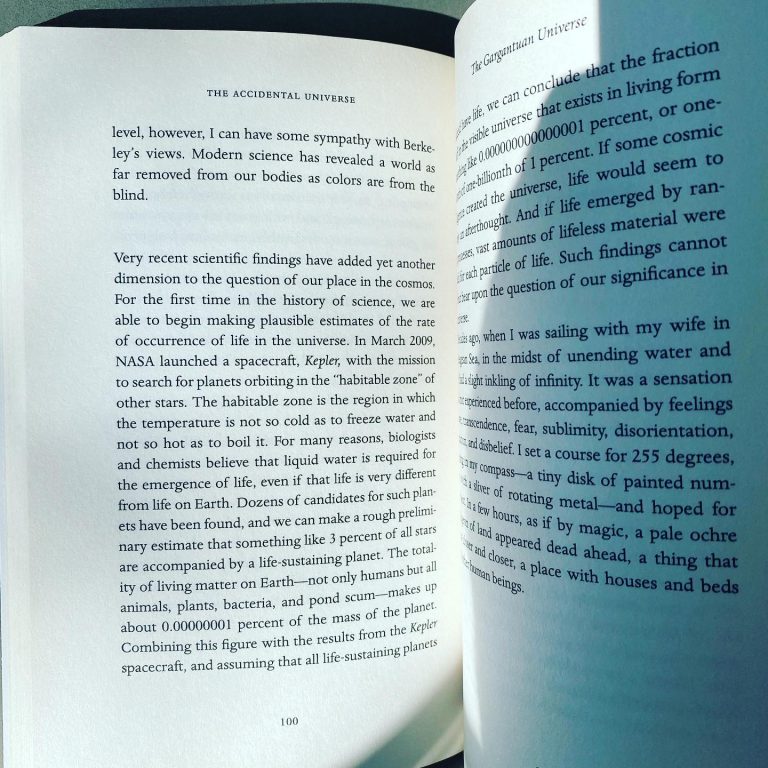
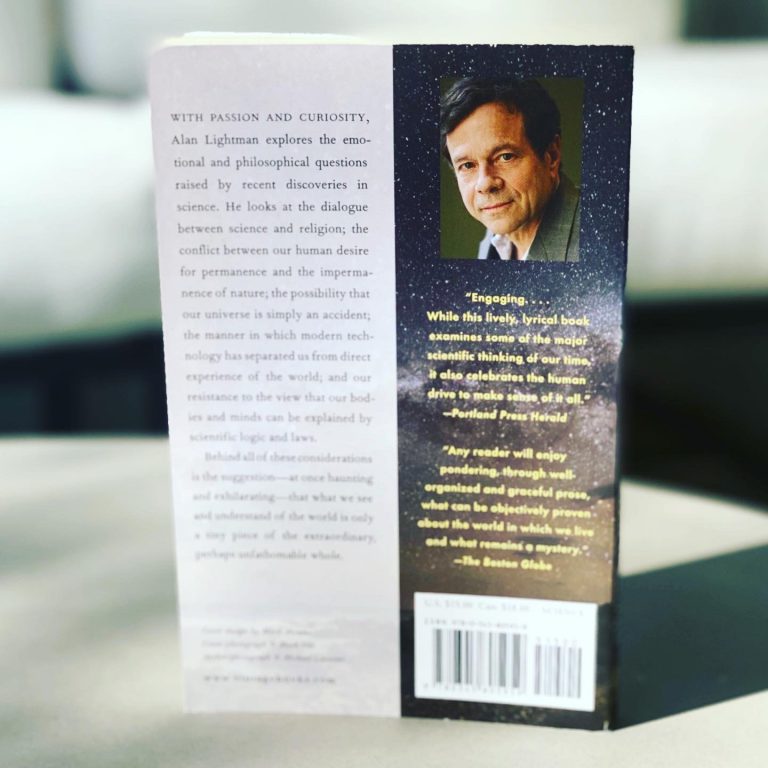
In typical Lightman fashion, a deeply elegant and concise book that covers a span of material of which others would need a multitude more pages. Here, he explores multiverse theory as an explanation for animate life — or rather, why life exists on this plant, in this universe, here and now.
Multiverse theory, supported by newer Nobel-winning breakthroughs beginning to identify the role of dark matter in the rate of universe’s expansion, and how this pertains to the atomic conditions that can give rise to life, gives room for the explanation that we currently simply to exist in one of the few universes that supports life, amongst the effectively infinite total universes, the vast majority of which do not. As for why we just so happen to exist in the universe that supports life, on a planet that supports carbon-based beings such as us, Lightman challenges the frame of the question itself; were we to not, we wouldn’t exist in the first place to report back on our standing in a “rare” life-sensitive planet in a life-facilitating universe.
Of course, an exploration of this topic immediately touches religion, a topic that Lightman weaves into the rest of the book with care, and in a surprisingly inclusive manner. He invokes the philosophies of those like Francis Collins, head of the human genome project, award winning geneticist, director of the National Institutes of Health, and devout Christian. While Lightman is an atheist, he sees appropriate space between questions of religion and science — in other words, many important questions of meaning fall outside of the scientific method, (while of course some fall within it). What someone does in the realm of the former, so long as it doesn’t violate the scientific process, can be comparable with a life spent in the sciences.