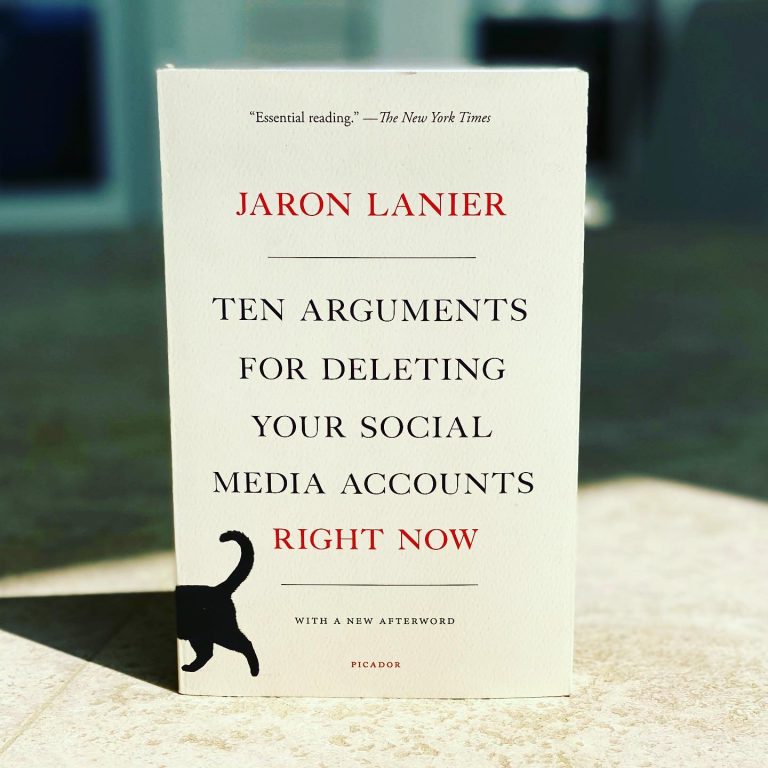
Ten Arguments For Deleting Your Social Media Accounts Right Now

- Form: Hardcover
- Page Count: 146
- Purchase Link
I’ve been scared of this book for awhile, and for that reason haven’t read it. That is probably for the same reason as most — I spent way too much time on social media. That statement is true, even though I probably still spend less time on it than most: I’ve deleted my Facebook., I barely tweet, and I don’t spend much time on LinkedIn and other platforms. But I still am entrapped and addicted to platforms far too much for my liking, and it doesn’t help that many Helena members I’ve worked with, (i.e. Tristan Harris to Renee Direstra) have played central roles in exposing some of the ways it has been exploited for significant societal harm.
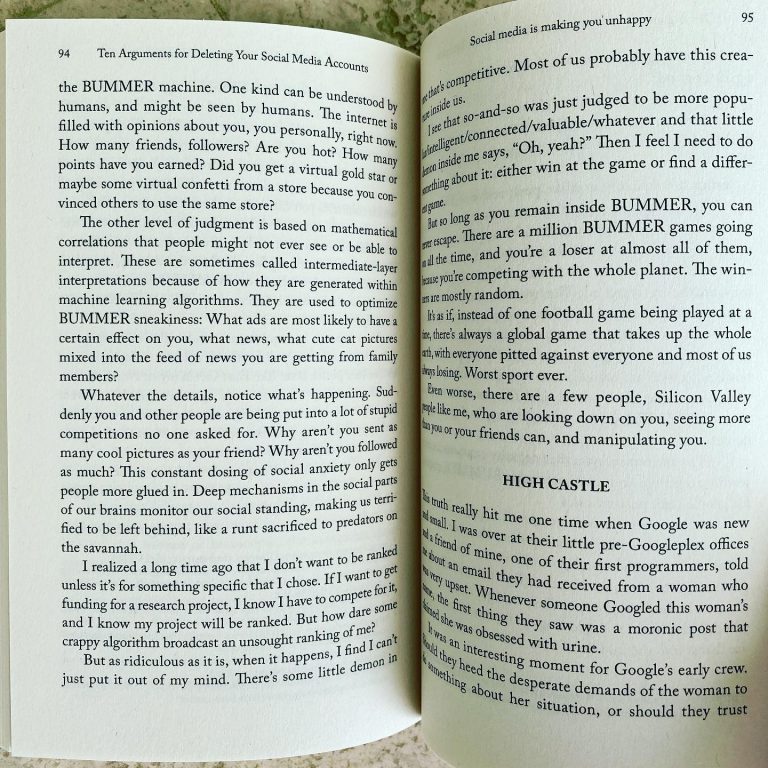
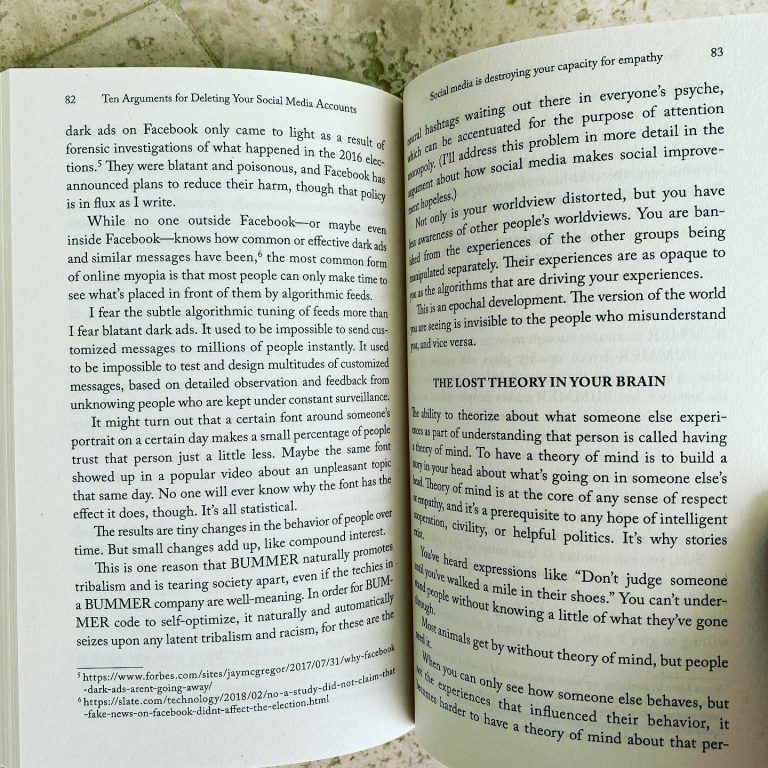
I met Jaron Lanier in passing a few times, and had brief conversations with him about his work, and his book kept coming up. I immediately bought it, and then left it on my shelf, terrified to read what I already mostly knew was true. He, of course, is brutally correct in a lot of the book’s argumentation, and we do face a fundamental and (in the long-term) potentially existential incentive issue when it comes to the business models of major social media platforms. (The irony of posting this onto instagram is of course also not lost to me).
Perhaps the best part of the book is the simple analogy Jaron makes about the why cat videos perform so well on social media. Something in our subconscious likes watching an animal who is a free will — not controlled by the forces around it. We want to be cats on social media, and we don’t want to be dogs, as much as we love them. It was such a simple idea that Lanier places at the front of the first chapter, but it permeated his whole argument, and dominated my day after finishing the book.