Superhuman
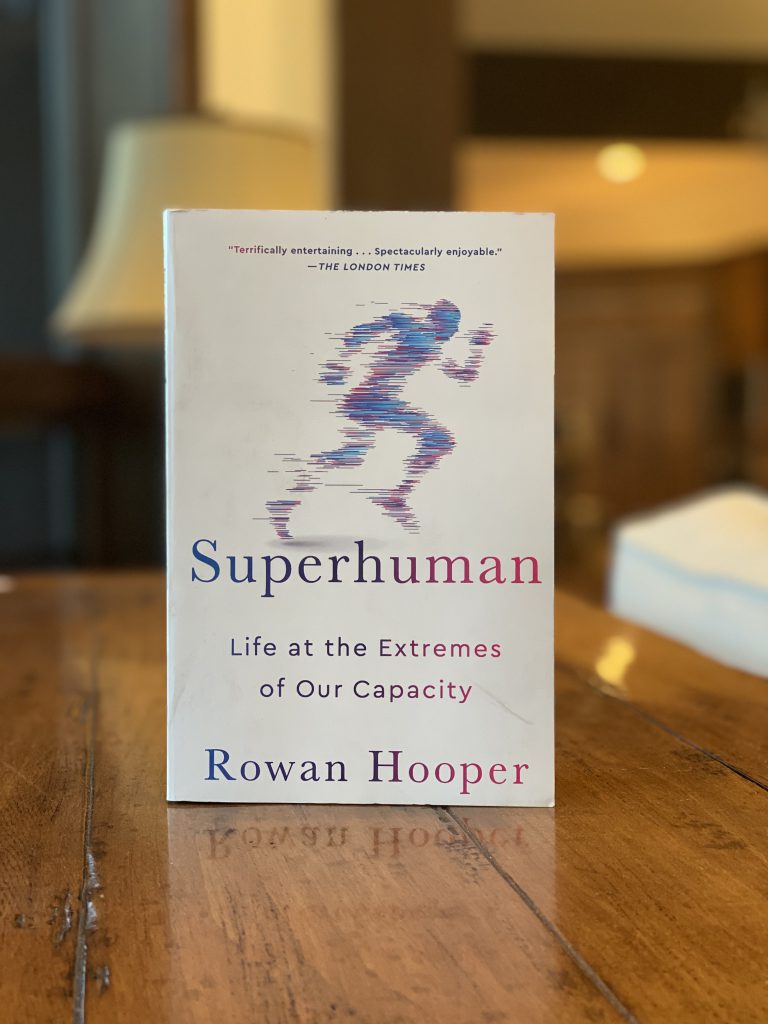
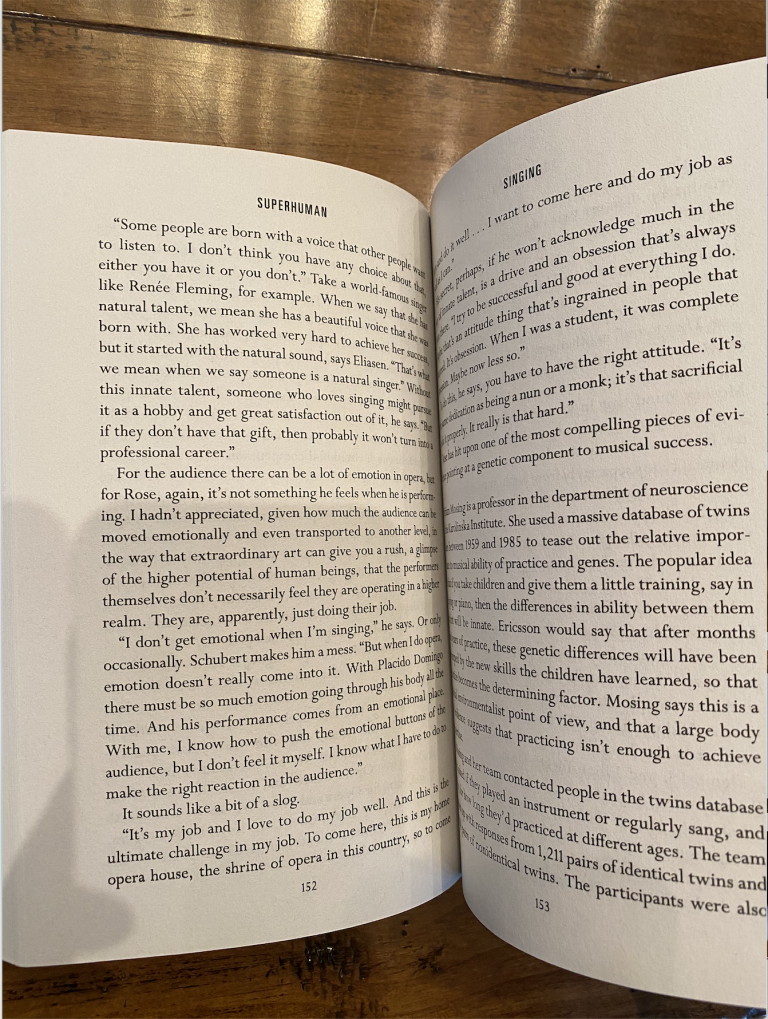
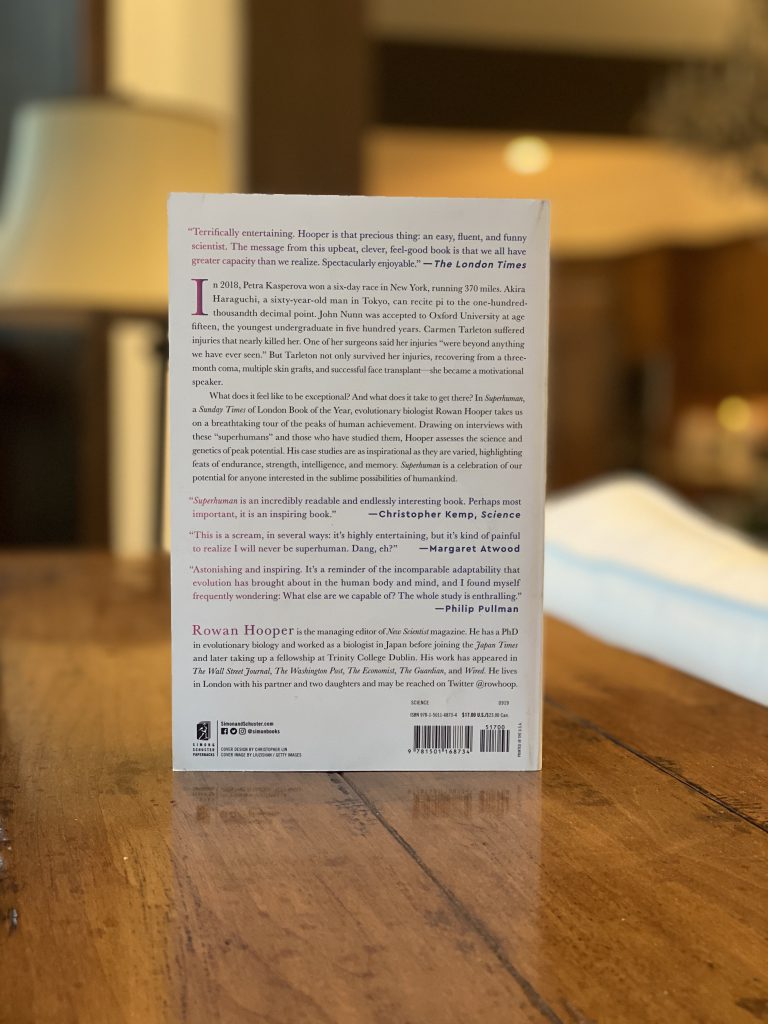
- Form: Paperback
- Page Count: 357
- Purchase Link
Such a fun read — one of the better books I’ve read about “human performance.” Usually, non-fiction that covers this subject is more of less an advertisement for a product the author offers, or some sort of self-help volume that reads as a resume. This was quite different. Hooper is an evolutionary biologist, and arrived at the idea to write this book after he realized that his long-held assumption that humans are virtually identical to apes and other primates needed to be examined from a new light.
He sets out to profile and attempt to scientifically understand humans who perform at the highest level in the world across a multitude of attributes, ranging from intelligence, memory, multitasking, extreme distance running, singing, old age, bravery, and more. In doing so, he gives a helpful review of the scientific debate about why these individuals can do what they do. I had heard of the “10,000 hours” concept prior to this book, but didn’t fully appreciate its infamy; Hooper walks the reader through the theory’s fervent believers and detractors, and gives an especially telling background on the fact that the theory’s creator feels his work was too simplified in of itself. We also get into the science between genetic factors across each of these disciplines, with unsurprisingly nuanced results.
The takeaway I got from this book is that most of us do have one (or multiple) areas in which we can be extraordinary. The trick, and what is in our control, is to engage in enough activities early enough in life that we end up lucky enough to find that area. Once we are lucky enough to have discovered it, significant discipline and practice is essential. Yes, genetics plays a significant role, and we learn in this book that it even plays a role in how good we are at practicing and generating motivation. But if we have already gotten lucky and found what we are genetically predisposed to succeed at, as a baseline, then we have already stacked the cards as heavily in our favor as they can be.