SQPR
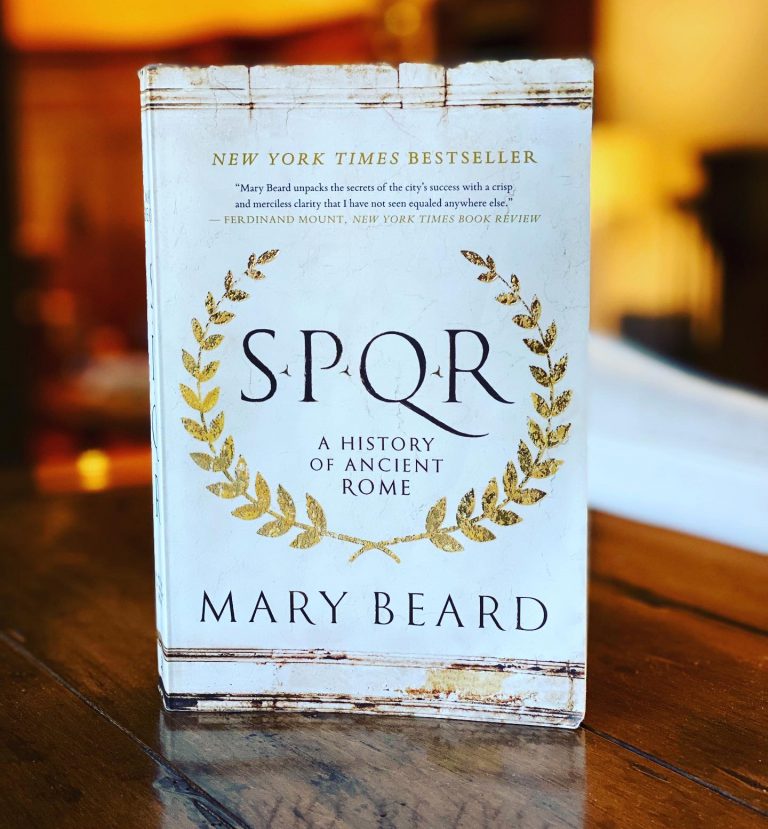
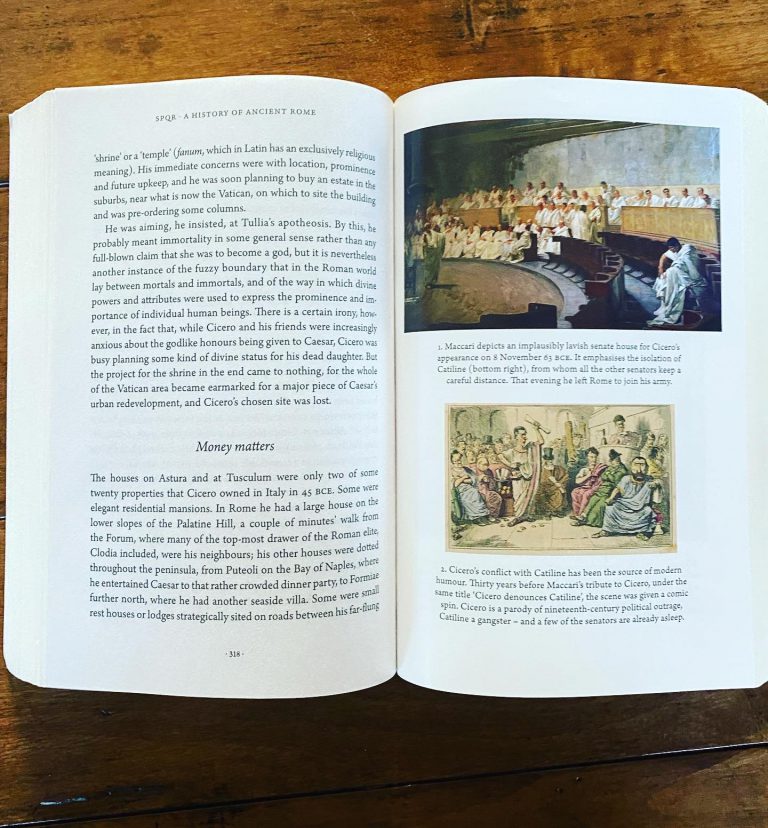
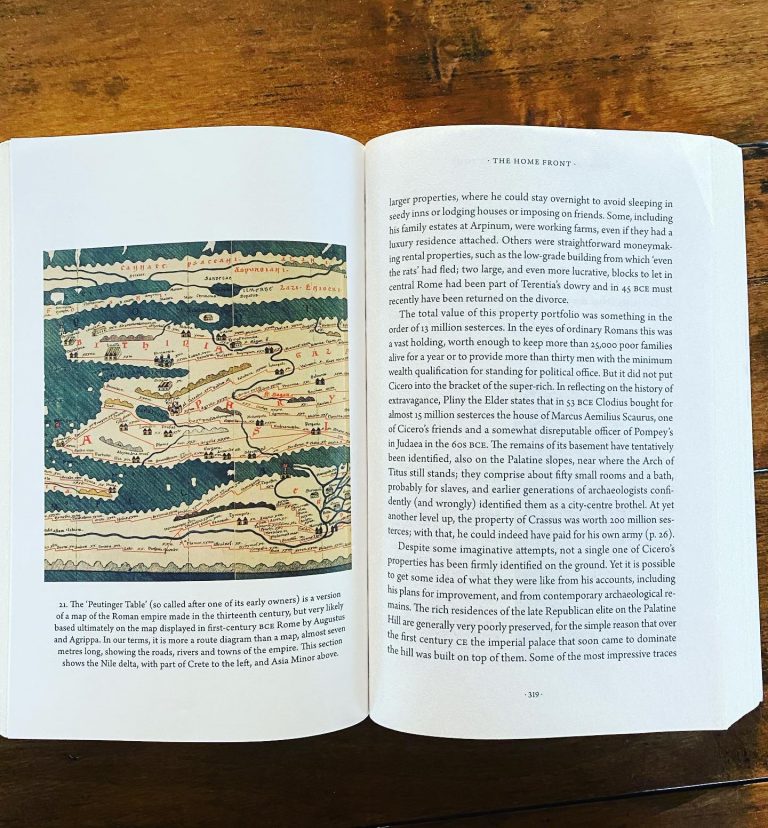

- Form: Paperback
- Page Count: 606
- Purchase Link
I have fallen helplessly in love with Mary Beard’s writing. I couldn’t recommend this book enough — even to folks who aren’t particularly focused on or fascinated with ancient Rome. This is not your typical history book, and it is also not your typical Roman history book. Beard is right, it is certainly “a” history of Rome; she has a definite analytical focus, and part of that focus is her choice of what to omit, not just what to include.
(Relatively) omitted from SPQR is detailed coverage of Roman military affairs abroad. I found this to be a positive — I am absolutely drowning in books on that subject, and often times a history of Rome (or any ancient civilization) ends up just being an excuse to recite historical battle formations and strategies. I have loved books on those subjects, but a more complete view of Rome absent that has been elusive up to this point. Also de-prioritized in this book are fawning and detailed character portraits of individual leaders — we don’t see chapters of systematic trashing of Nero or new-age stoic worship of Aurelius. Beard does an excellent job of weaving them into the narrative, but does so with the right qualifications, and without getting stuck on the individual. She isn’t afraid to show where the “great person” theory of history falls short in the case of Rome, where disease, accident, or just boring explanations trump the sensational.
The main character of this story, as much as Beard could make it, are the actual people of Rome. She does an excellent job (with such little data) of giving the reader a picture of how the average person lived, how they interacted with their families and neighbors, how (or if) they traveled, what they thought of Rome’s deity system, and whether or not they were affected by the current vicissitudes of leadership. She also focuses heavily on political systems — how Rome was governed and how, in many cases, it was not. She gives credit where it is due to the senatorial system, for Rome’s relative diversity of citizenship and acceptance of other cultures (relative to the day), but she also brings light to where myth trumps reality. My favorite section was her long introduction, her coverage of the histrionics of the Romulus and Remus story, the almost certainly mythical early Kings of Rome, and how the great thinkers and writers of the imperial Roman age and beyond so successfully spun their messaging web to preserve these myths into the modern day.
This is not a short book — it is readable, but is not something you are going to get through in a day or two. At around 600 (thin) pages, the text isn’t huge, and I would recommend setting aside focus and time to really enjoy this. Because it should be enjoyed, and not treated as just another history book of facts and figures to throw in your brain and move on.