Scenes Along the River During the Qingming Festival
- Form: Hardcover
- Page Count: Continuous Scroll
- Purchase Link
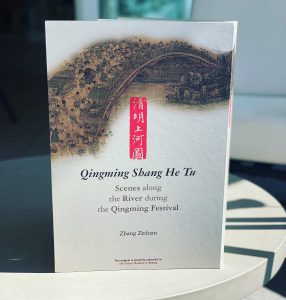
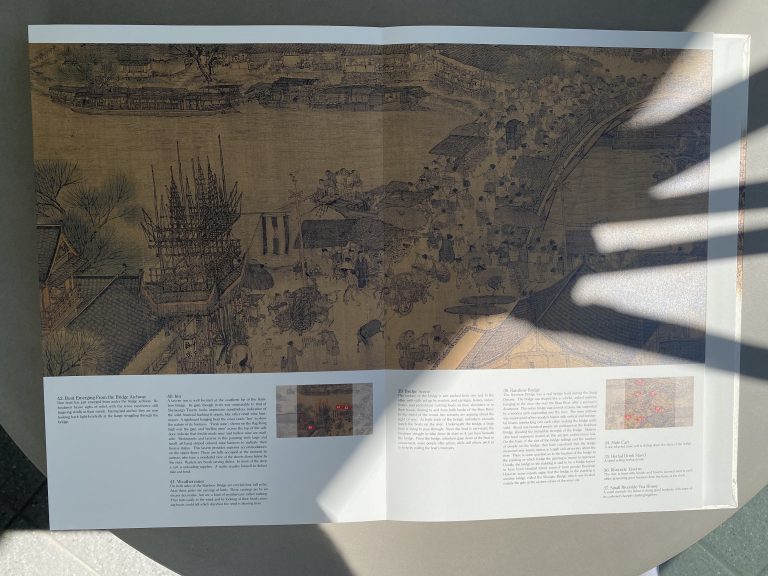
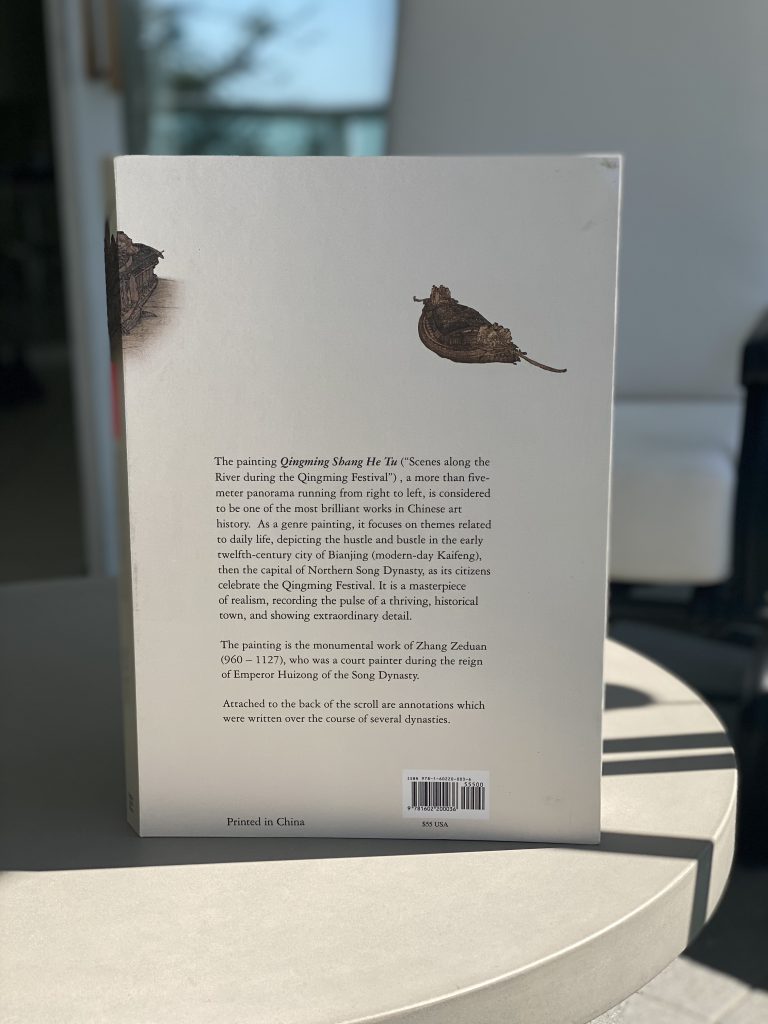
This was a brilliant walkthrough of one of the most important pieces of art in Chinese history — Qingming Shang He Tu (Scenes along the River during the Quingming Festival), depicting the cityscape and waterways of 12th century Bianjing, which was at the time the capital the Northern Song Dynasty. This book is constructed in traditional Chinese language format (reading right to left), and gives an incredibly detailed breakdown of every minute detail in the 500+ meter panorama. I really, really, enjoyed looking through the art piece and stretching the entire thing out right to left to take it all in.
There are so many hidden secrets embedded into the piece. Zhang Zeduan is Da Vinci-like in his attention to detail (it is stunning and something to be constantly reminded of that this is a painting in the 1100s). From the facial expressions of waiters, hotel guests, soft drink stands, wealthy travelers to the architectural depictions of large and small building structures and incredibly intricate boats, the panorama is also drawn with accurate visual perspective, which is almost unheard of in art of this time period. This is also a reminder of the economic and political development of Chinese civilization during a time in which the rest of the world was far, far behind. This is an image that would seem accurate were it to be depicting the Mississippi River Delta in the late 18th century, not something 700 years prior.
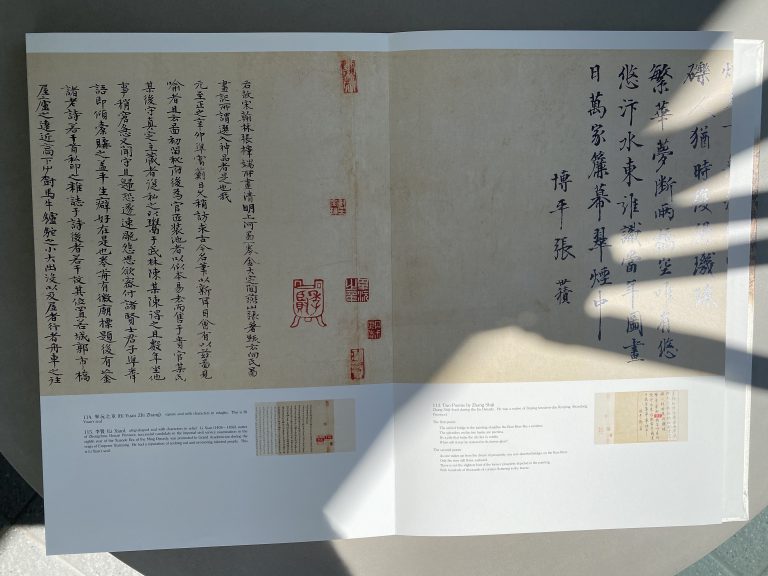
One of the most fascinating parts of the work is what is written on the backside of the panorama’s scroll — meters and meters of notes and poems from the successive scholars and art collectors who owned this work over the centuries. You become engrossed in the politics of how individuals and institutions got a hold of this painting, how they lost it, and what their analysis of Zhang Zeduan was, even after hundreds of years. To see that on the back of the piece itself is stunningly impressive.