On The Nature of Things
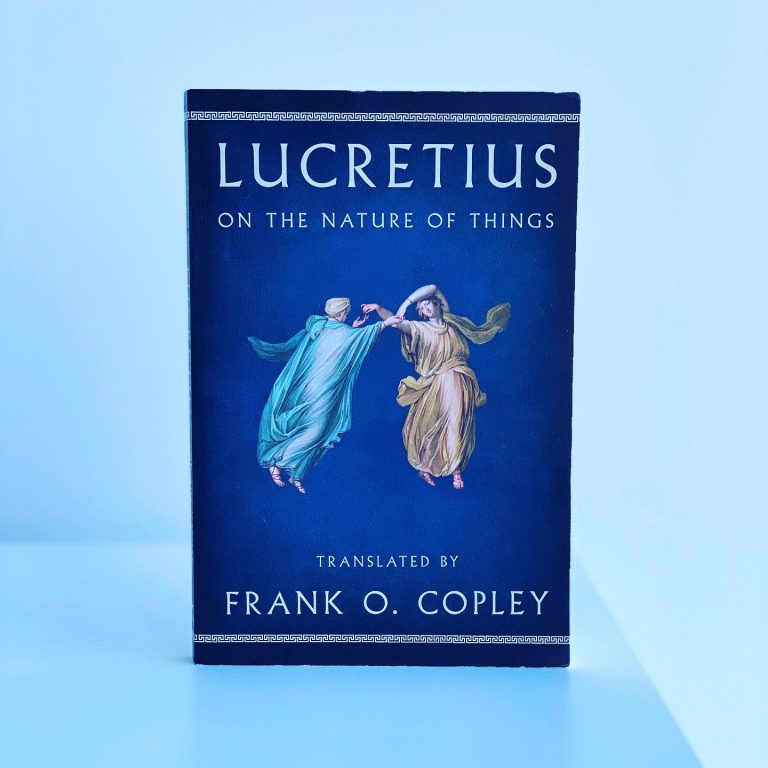
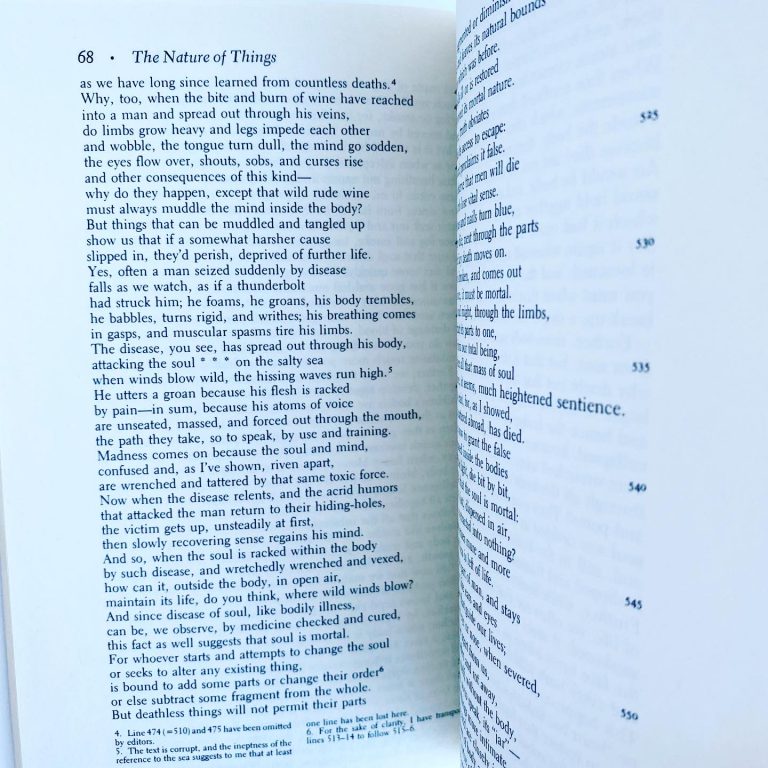
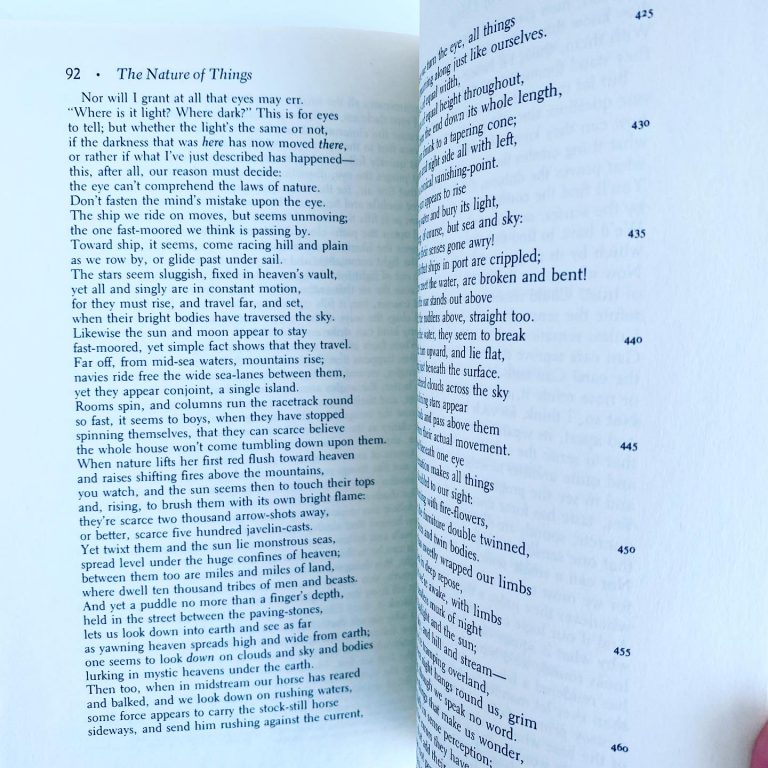
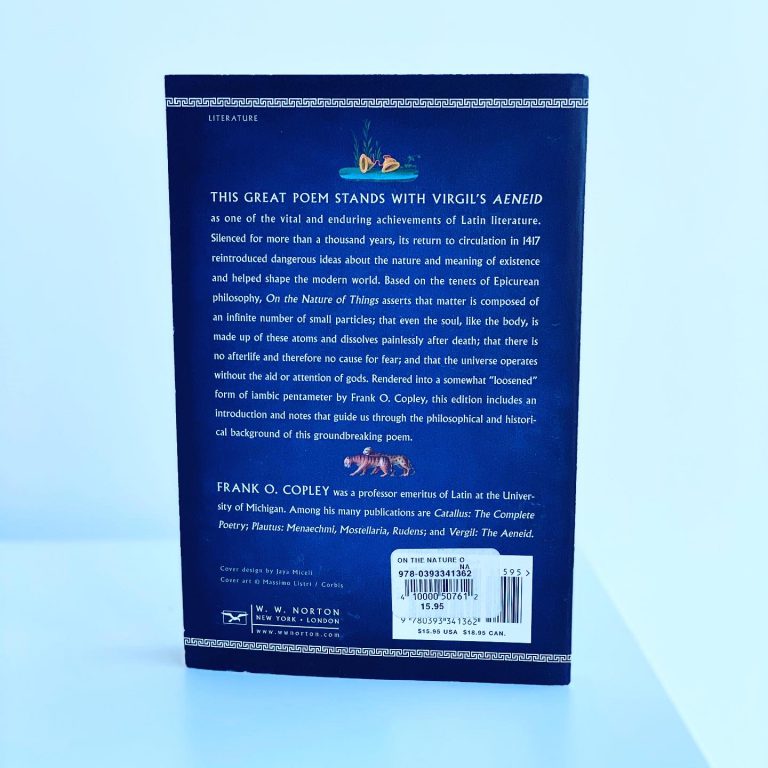
- Form: Paperback
- Page Count: 178
- Purchase Link
One of the great great classics that I’ve been meaning to read for awhile. This was unique to me among many of the philosophical texts from this era that I’ve read in its elegant and direct practicality; in most of his prose, Lucretius is simply describing the world around him a priori. It is incredibly profound in some areas, and highly specific in others (why people are wrong to think fire exists inside of wood, wind’s role in seafaring).
The discussion of “atoms” and the “void” in the poem is of course amazing considering its accuracy relative to the scientific knowledge available at the time, and the depressing fact that much of this knowledge was subsequently forgotten by most of the world for ages after. Upon its return in the 15th century, after a thousand years of suppression, the text re-introduced fundamental ideas, often antithetical to religion, that caused seismic change.
Copley’s translation is great. This book is a bit of a commitment — it is a continuous poem in matter of fact, but still dense prose.