Let the People Pick the President
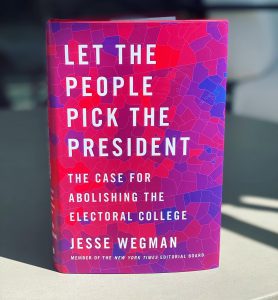
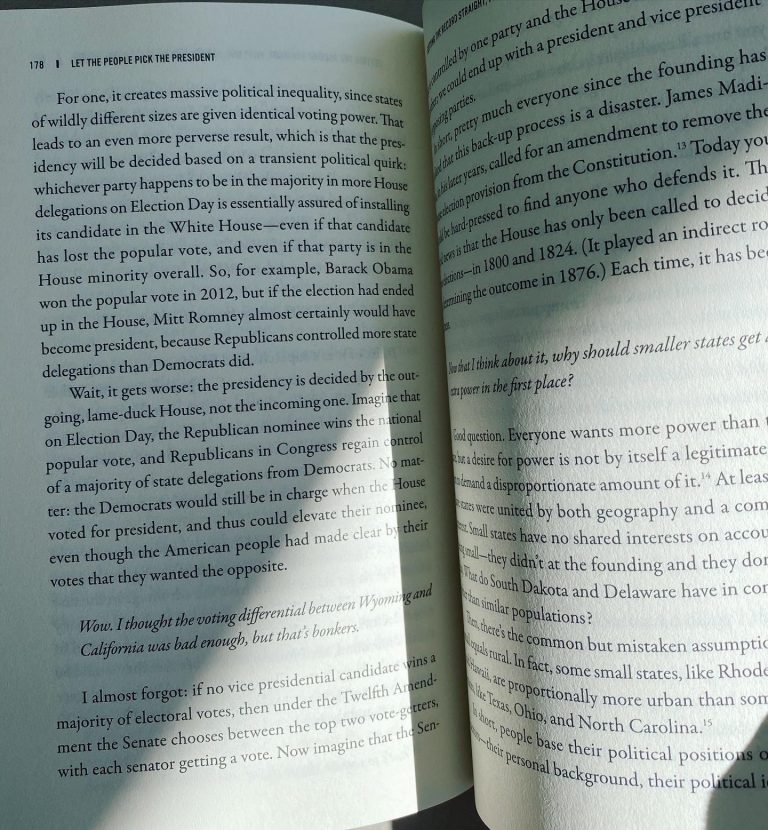
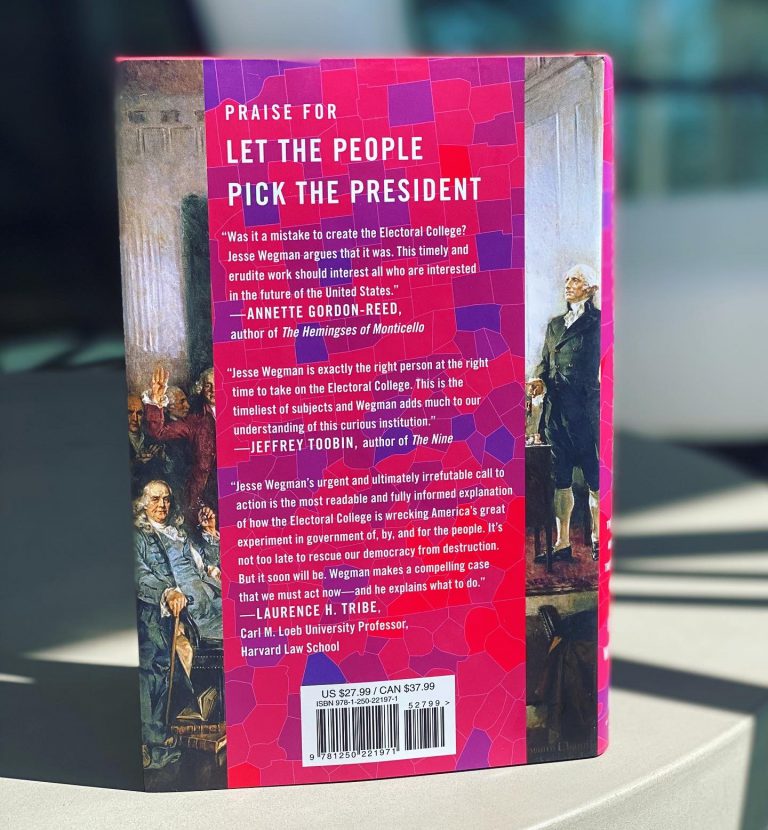
- Form: Hardcover
- Page Count: 304
- Purchase Link
I’m beginning a bit of a personal deep dive into the history of the electoral college, and the fascinating and complex debate that has surrounded its existence and construction since the inception of the United States. This was a great introduction to the argument against the college, or at the very least as an expose of the winner-take-all provisions of electors by state.
Wegman, a member of the New York Times editorial board, is pleasantly surprising in his ability to self-diagnose inside of his own argumentation and provide rational of the other side. Even so, I am looking for other books that take up the other mantle, defending the college and its construction. (If anyone reading this has a good book that does that, please let me know).
This book also serves as a quite well written constitutional social history of the United States from the vantage point of the electoral college debate. I thought I knew at least a bit about the relationship between the college and slavery, Jim Crow laws and the post 1860 resurgence of anti-black governance structures in the south, but Wegman gives a far deeper and more explosive summary of it than I have heard.
It is in structural governance issues like the electoral college that I fear many who seek positive social change are under-versed, and it’s a shame. We should all better understand the intricacies of how we are governed and the context behind how those structures were created in our hope to improve them. Yet even given the subject at hand, Wegman still marvel at the genius and foresight of the constitution, as do I.