Brave New Arctic
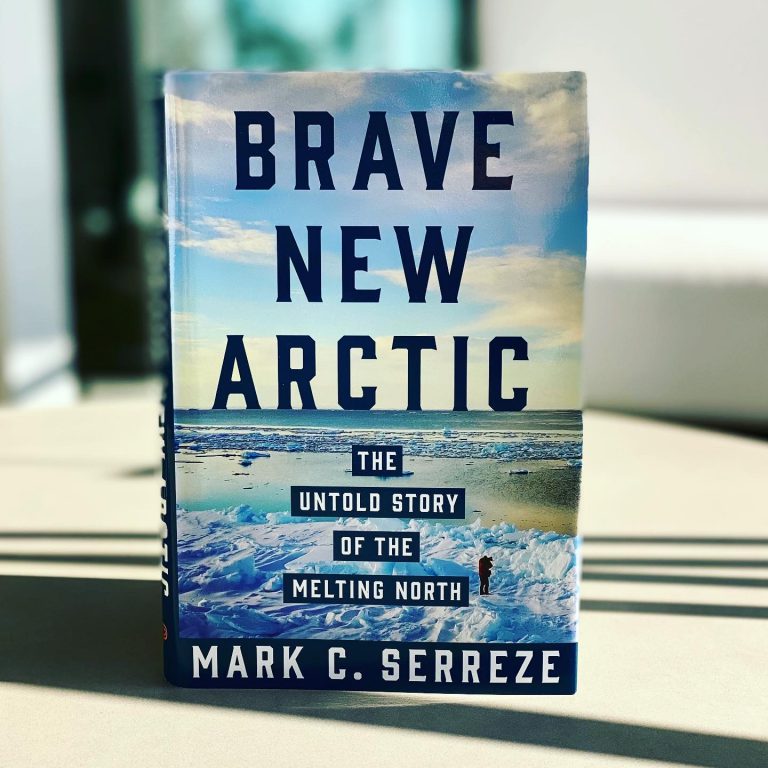
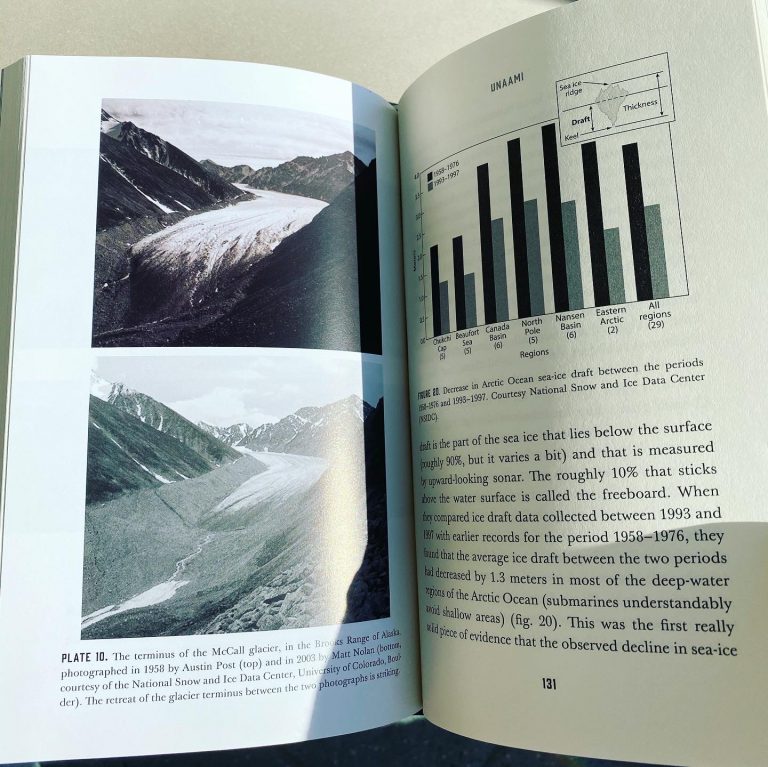
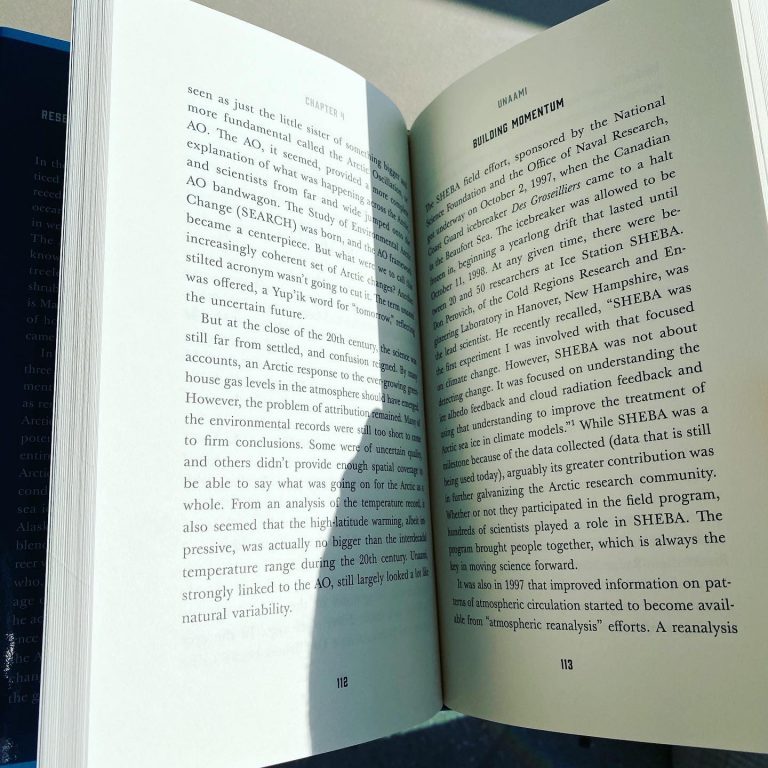
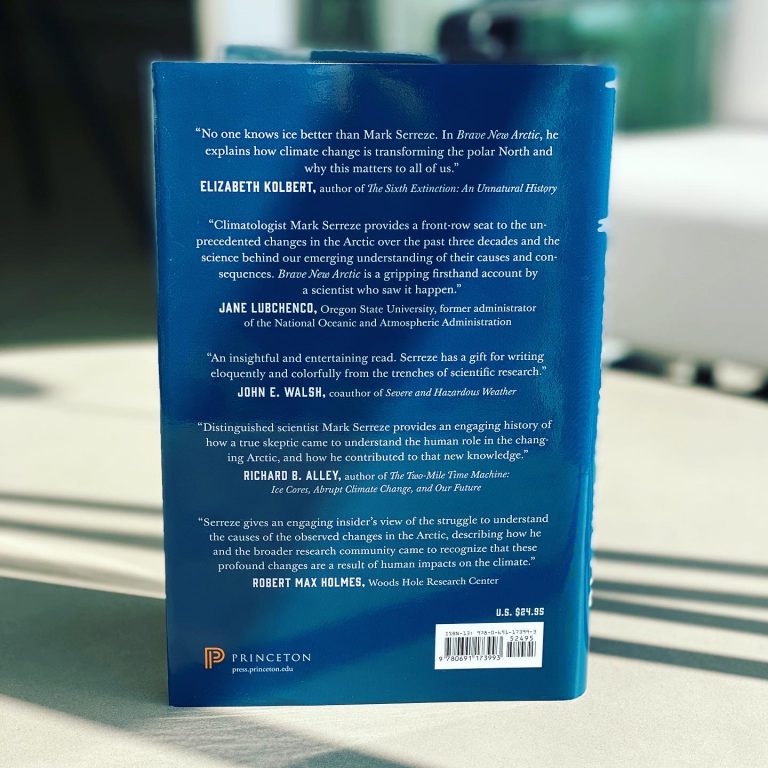
- Form: Hardcover
- Page Count: 255
- Purchase Link
This was a great book to read — but a tad different than I assumed. It is a fascinating tour of the last few decades of the academic research community’s work in the Arctic, and weaves in the individual story of the author. The biggest area that this book showed me was how complex and nuanced the topic of climate change really is. There are so many pieces to the puzzle that do not fit clean, simple soundbites and political speeches, and there is still so much more to study. This is not at all in conflict, to be sure, with the fact that climate change is an existential (defined slightly loosely) and critical threat to the future of humanity on planet Earth. And the fact that both of these things can be true is unfortunately also part of the problem.
Serreze does a great job of walking the reader through this. We see that isolated parts of the North (and the rest of the world) can slightly or significantly cool, and the fact that they are warming is a cog of supporting evidence for overall global warming. We see that volcanic eruptions during the early 1990s led to a few years of global cooling (barely), an exogenous effect having nothing to do with human emissions and anthropomorphic climate change. It gets at the problem with information in the 21st century — the scientific process makes room for nuance, and the media unfortunately (in the large part) does not. Books like this are critical to understanding the full picture of what we truly know, what we still need to know, and how all of these facts weave into the right course of action to respond to this seminal threat of our time.